Thursday, 11 July 2024

The Great Iberian Road Trip, Day 8: Thieving Pterodactyls and Lying Property Sharks

Leaving San Vicente de la Barquera was not easy. Being such an idyllic place yet with some decent life, any locations from now on would have some big boots to fill. In order to get through the long summer exile, it was necessary to book a couple of cheaper places for a longer stay where we could carry on ordinary life. We were heading to a place called San Cibrao, a village on the northern coast about 50 km from anywhere. On the way, we decided to stop off in Gijón, a city famous for the Santa Catalina Hill of sculptures by the sea, the Fishermen’s Quarter, and having a name that sounds like a donkey’s call.

Approaching Gijón, we were under the impression it was a fairly working city with a lot of companies, apartments and nothing else. But we were mistaken. The historical city centre of Gijón is on a rocky outcrop between two glorious beaches and the main port. I parked the car close to the Santa Catalina park by a couple of cafés that Google recommended. We entered one called La Tinta Del Mar, an archetypal maritime place: no frills, plenty of smiles, decent honest food, and proper coffee.
The children needed to let off a bit of steam, so the stopover in Gijón was supposed to be refuelling, then a good run around. In the café, the first thing that caught Bonny Bee’s attention was the Lure Of The Tostada. For anyone who is unaware, the tostada is Spain’s late-morning staple. It’s often about 15 to 20 centimetres of baguette cut in half and toasted, served with olive oil and fresh tomato paste, usually made on-site. The bread offered in this place was slightly ciabatta-looking, but nonetheless attractive. We jumped. I have to say it definitely hit the spot.


The kids had a couple of cheese and ham sandwiches, and we headed out on to what one might call Gijón’s top-floor balcony, Santa Catalina. It was a fairly gloomy day, some droplets of rain around, but on the whole not one to deter us from enjoying some sightseeing.
We walked up the grassy hill to find a woman with a cute little spaniel cross off the leash. Looking at Livia’s body language I could see what was going to happen next. As soon as Livia opened her mouth and did her usual irrational screaming-and-running performance across the park, the dog set off in hot pursuit. This sweet little companion dog must have thought “ah finally, someone playing to my ancestral instincts!” As a guard dog, it was more likely to lick any intruder to death, but there’s no changing the mind of a girl convinced every gormless pet with hair and four legs is going to murder her.
The owner set off at a fair pace to retrieve her dog, whistling, calling its name and generally looking insulted that anyone – ANYONE – could be remotely scared of her dog. She rather brusquely said to us “your daughter is going deeper into the territory where other dogs go, you should stop her!” Well, madam, I would, but as your four-legged creature is off its leash in a public park, it’s kind of hard to justify blaming my daughter for running off, especially considering she has absolutely no control over her emotions and her actions when it comes to dogs. After the badly choreographed Benny Hill Reenactment had been snuffed out by an indignant dog owner and a very athletic Bonny Bee, we continued our walk around the park.


It was full of the usually inexplicable artwork that city councils tend to dump in their municipal parks to give the locals something to stare quizzically at and for the pretentious to hail as works of genius. In any case, it was a pleasant park; in the middle, a huge nineteenth-century military installation to protect the port from invasion and on the lower levels a large inviting children’s playground, which has become the most essential element on this trip of any successful day out. Anything less than that is an unadulterated tragedy.


The family democratic process has gone like this:
ME: So, what shall we do today? We can go to a castle, take a ride up a mountain, visit a farm, or go and see an island.
KID 1: But we want to go to a playground!
KID 2: Playground!
BONNY BEE: We can go to a playground but first we want to see something else.
KID 1: That’s not fair, it’s so booooriiiing!
KID 3: Playground is best, maybe one with a slide and swings.
KID 2: Yeah, not like the one yesterday with only two swings!
KID 3: We want one with a moving slide, a climbing frame and – and – and – and lots of different swings!
ME: But you enjoyed the other places we visited.
KID 1: Yes but it’s not what we want!
ME: What about us?
KID 2: …
And on it goes. There are times that I must say I have felt marginalised by my own flesh and blood. Back in Valencia, when Milda creeps in to our bed in the middle of the night, it’s big enough not to make too much of a difference. But here, the bed is nearly as narrow as the dining table. And the dining table isn’t exactly fit for a Putin-Macron summit…
So we spent a while in the playground before going to check out Gijón’s old town. In the maritime gloom of Spain’s north coast lie a series of incredibly underrated towns and cities. Gijón is no exception. All right, it is never going to compete with the big cities, but it has a lot of charm. The Town Hall Square is an ornate rectangular treasure with buildings that reminded me of some of the smaller city squares in Poland, with their arched porticos and doors so high that a horse standing on top of another horse could enter with ease.


We sat at one of the two main cafés in the square and were immediately greeted by a seagull that, upon seeing three small children, was looking forward to robbing them of the cakes we had ordered. It was as if it knew. Kids are so predictable, even bandit birds know what’s coming. And yes, the shrieking feathered skyrat mugged us of a lot of cake to the extent that it landed on our table and physically dragged a slice of cake clean on to the floor. It was, for a couple of seconds, quite a shock, but the kids found it uproariously funny, so we just went along with that. Although we knew the seagull had done us up good and proper.
Seagulls to me are like Cristiano Ronaldo or Elon Musk. I detest them to my very core, but I can’t help but admire the way they outmanoeuvre everyone they confront. I watched in dumbstruck awe as one of these Terminator birds flew across the square about 3 floors up, glided effortlessly into a narrow side-street, and took a sharp left down another. At about 40 kilometres per hour. In the drizzle. If I did that in a car, I would have been liable for a humongous amount of carnage. They are thugs of the sky. The kind of creature that Bond villains would be based on.


The café itself was a truly delightful place to be a patron or a worker. But unfortunately the workers were unfriendly, impatient and not in the least helpful. It’s the type of place without a base of regular customers. The sort where people go once and never again. The guy who took our order had all the approachability of a Soviet Gastronom attendant but without the smart apparel. The misery etched on the faces of the staff told me a lot about the place. I didn’t write a review on Google, because I sensed they were being hounded by their boss, and I didn’t want to get them into trouble. But there was something not right about the place.
We headed back to the car and made our way to our next destination, San Ciprian, or in Galician San Cibrao, an undistinguished fishing village miles from anywhere. About 30 km beforehand, I messaged the agent to tell her we were half an hour away, and she said she would be waiting for us when we arrived. After a little confusion with the exact location, the agent came into view. For the next three weeks we were to stay here in the unpredictable climate of northern Galicia, so we hoped it was at least a decent apartment. It is situated in an urbanisation about 1.5 kilometres outside of the village, in between the trees of the never-ending primary forest all around us.
The woman herself was lovely although she gave me the impression she had lived through a lot. She told us we could park in whichever one of the three covered and numbered bays outside that we wanted, which I thought was strange. I took out the suitcases to have as few journeys to the apartment as possible and awaited her instructions. She said she would help me by bringing one of the suitcases up. In fact, she insisted, against my protestations. They’re heavy, even for me.
“You’re on the third floor,” she said through a set of teeth so long they could pick lettuce up off the floor without bending down in what seemed like Spanish spoken by a Portuguese.
“I’m glad there’s a lift then!” said I, naively.
“Yesh, but it doeshn’t work anymore. There are sheven rezhidenshesh, but only one ish year-long occupied. And they live on the firsht floor, sho they don’t shee the need for a lift.”
So we dragged the shootcayshesh – sorry, suitcases – up three flights of stairs. She gave us the keys and told us to go on ahead, she would take a little while longer.
“You (puff) get shtarted, I’ll (snort) take my time (wheeze) and shee you there (gasp).” I was a bit concerned about her, but she insisted. I could hear her groaning and mumbling as she made her way up the stairs.
“Please, just leave it there, and I’ll come down for it in a little while.”
“I’m nearly at the shecond floor, just take a glansh around, shit on the shofa and I’ll be there in a couple of minnitsh.”
To her credit, this poor woman, who obviously felt pressure from the people who run the app we used, to do her very best. And she did, bless her. I will make sure she gets a terrific review on there, and make sure the app people know how I feel about them. Because when she got to the top, in the glow of the hallway light, you could see where she had had open heart surgery. Exploitation of subordinates comes in many forms, and making anyone in that state of health feel the need to go that far is an outrage.
In any case, she showed us about the place, spotlessly clean but a little outdated (sounds familiar), with a proper number of bedrooms that hopefully we could get the kids to sleep individually. But there was a huge TV, which was great for watching kids’ TV and Euro 2024. I had drawn Spain in the coworking sweepstake. In fact, I fortuitously happened to be there when they made the draw and was invited to assist. I not only pulled Spain out, I pulled my own name out, much to the merriment of everyone there. I did offer to put it back in and let someone else pull out a country for me, but they were adamant that I should keep it. Well, what’s a guy to do? Never in my life did I want to lose a bet as much as this, but hey, I’ll let it go!
Back to the apartment. After the lady showed us around the place, she told us to get in touch with her if there were any issues at all. I had a feeling we might need her a few times. I found it really sad, disgraceful even, that five of the apartments out of the seven in this block were empty, and only one – ONE – actually had permanent residents. I just didn’t get it. How could the local government let the place fall into disrepair like this? We took a tentative ride into the village. The road from the urbanisation to the village is long and straight. And you can see from the very other end the symbol of local government incompetence: the empty skeleton of a block of apartments or offices, that had obviously been there a long, long time. Deserted, abandoned, unloved and unwanted.


What was saddest, though, was that if this atrociously-placed eyesore hadn’t been started in the first place, the direct view to the sea would be a perfect way to say “Welcome to San Cibrao”. Instead, some construction cowboys had slipped a few backhanders to some malleable councillors and got the necessary permits. It happens everywhere in depressed areas – then the building firms declare bankruptcy and the money disappears, leaving an unacceptable legacy for the local people and turning them against the politicians who did this. And this is how the more extreme parties get noticed – because after the mainstream ones run out of credibility due to taking the populace for granted (they’ll always vote for us, won’t they?) the only alternative is to give them the Stinkfinger, as the Germans call it.

EXTRA PHOTOS:


Friday, 5 July 2024

The Great Iberian Road Trip, Days 5-8: If Cornwall Were Italian It Would Look Like This


The arrival in San Vicente de la Barquera was a mix of happiness and frustration. We were thoroughly excited to be in such a spectacular place, but the one-way systems in the town made it almost impossible to find the rental accommodation. The instructions were sketchier than the Technical Challenge round in the Bake-Off semi-final. In the end, it was simply me overthinking the situation. We had a spot in a typical Spanish indoor parking area - I don't know what it is about their propensity for converting their spare rooms into places to store cars, but the number of dodgy locations I’ve seen which are designated for cars would never pass the planning stage anywhere north of the Alps.

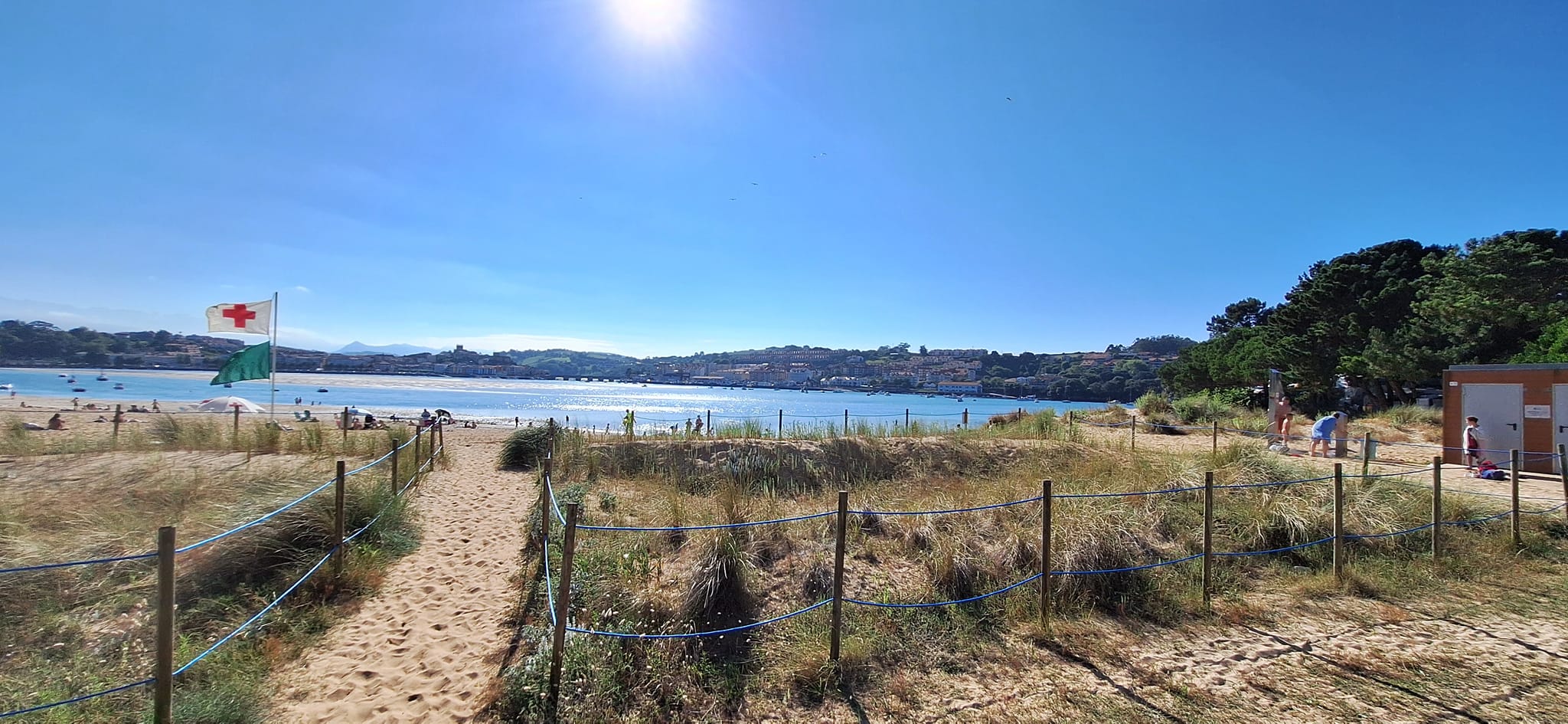
Our apartment overlooks the pseudo-Cornish inlet of the river Escudo, with a smattering of private boats moored on the channel. About 350 metres away on the opposite side of the river mouth lie two perfectly-formed semicircular beaches that lead up to a campsite, an apartment block, and some typical seaside cafés with their usual fare of substandard cakes and overpriced fried food. But in amongst them is a proper restaurant with a daily menu and real waiting staff. Something for everybody.
Heading along the road from our apartment on the right are blocks of apartments, a couple of supermarkets, a pharmacy and another café, and on the other side are the fishing docks where people come at all times of the day and night to purchase seafood and fish straight out of the sea. At the roundabout at the end, a right turn takes you over a fairly long, curved bridge towards the beating heart of the town. Here we find the Old Main Drag, as a famous Irishman once sang. The narrow streets and alleys leading off bring up some memories of Menaggio, on Lake Como. This is doubly confirmed by the view from the banks of the inlet as one goes left around its periphery. The colourful buildings rising up the hill to the castle, and their reflection on the still waters of this natural harbour all draw similarities with the Italian Lakes.
But without the pushy tourists and the unprincipled local pricing.
We both have responsibilities while we are here: Bonny Bee is making sure we stay financially afloat by doing the vast majority of the professional activities on this road trip, and because I’m the one with the driving licence and the knowledge of the area, I’m seeing that the kids have things to do.
After settling in, I went out to the supermarket to buy a few groceries and get acquainted with the locality. I decided to make something easy like pasta with bacon and tomato sauce. There was very little in the way of herbs or other loose products, so I just threw the lot together in a mishmash of filling nutrients. This is the main issue I have with tourist towns: I couldn’t even find proper muesli or fresh milk: it was all big brand rubbish in small quantities – the cereals with the green and orange cockerel on the front, the chocolate spread with the huge lettering, the yoghurts made in a French mega-factory near Nancy, and the coffee from a Swiss giant that I refuse to even touch, let alone buy. I settled for a local brand called Dromedario, which turned out to be really tasty, unlike that other mess that they roped George Clooney into hawking in a series of cringeworthy adverts.
I tend to stay away from big brands for most things, because they are so brutal in their marketing, that they are obviously trying to push aside any competition that might be better. Which is often all of the rest. Sometimes a few extra shekels gets you a much, much better quality product, and sometimes the cheaper supermarket brand is the best option.
Anyhow, the kids were not just hyperactive from all that sitting and relaxing in the car, they were excited to the point of delirium. I could tell it was going to be a pretty exhausting night. After a series of threats and confiscations, they eventually dropped off at around ten-thirty. Sleeping all in the same room brought a level of misery and despair to us a couple of years ago in Roskilde, but this has turned to sheer frustration – progress, one might say…
The morning light, accompanied by some pleasantly fresh air, gave me the urge to get going out to explore the town. But Bonny Bee and the children had other ideas. Bonny was excused, as she had a lot of work to do. The others just wanted to watch kids’ TV and take it easy, which is fair enough if you’re my age, but they’re at the battery-operated bunny rabbit stage of life, so they should be badgering me, not the other way round. In any case, I managed to get two of them out for a while; Dainoris had spent too long wasting our time, so to make a point, we left him with his mother.
The town was located about a ten-minute walk away from our place, and walking around it shouldn’t take that long, but there were a large number of obstacles in such a small area. Milda and Livia have an irrational fear of dogs, and this whole town is pooch paradise. Punctuating the random darting off screaming at the sight of a vicious-looking Labrador or a sabre-toothed Jack Russell, we managed to make it to the safe haven of a set of high bar stool at the first café in town. The rest would have to wait. After a soothing pineapple juice for them and a coffee for me; we carried on our walk, with me trying to stand between the girls and the ferocious poodles and brutal spaniels that blocked our path.


The main squares in San Vicente accommodate a tree-covered community meeting area, a number of cafés, a medical clinic, the central market, with the rest for cars. We walked around the serene harbour with the faint sound of fishing boats chugging out towards the sea. It was suddenly lunchtime and having been in Spain for nearly a year now, we are experts at identifying rip-off one-time-visit restaurants from the more family-friendly, repeat-visit ones. A good place was just opposite the market and a jolly old geezer with a smoker’s cough came out to hand us the daily menu, which seemed to have been the daily menu for several weeks.
In any case, Livia predictably chose spaghetti with tomato and minced beef, and Milda surprised us all by requesting fish. No ordinary fish, this was a connoisseur’s choice. Since she was still unable to walk, she has had an adventurous taste in food – this hasn’t shown signs of stopping. She also happens to be great company: nice chats, fun games, spur-of-the-moment singing… She makes our time pass so much more easily.
We then took a walk through the palm tree-lined park to the children’s playground at the other end of the town for a play and a little bit of energy-reduction before we headed back to our apartment to face the wrath of a rather truculent Dainoris. In the end, he had become quite meek and contrite, and since then seems to have calmed down a little.


That evening, I spent the rest of the time sitting in the huge bay window in the upstairs room looking out on the river mouth with the laptop. This was the perfect place to write – I will be returning here in the future.
The next day, Wednesday 3 July, it was the two girls who wanted to stay at home and Dainoris who wanted to go out. We did the same thing as the day before, except we had lunch in another local establishment. He met some younger kid in the playground who took a shining to him, and we would run into him a few times round the town.


So far, it had been a little bit of a dysfunctional stay in San Vicente, and Bonny Bee had hardly seen or done anything. So that afternoon, we managed to get to the beach – it was a glorious day; the kind of cotton-white clouds that amble leisurely across the sky and change shape on an almost constant basis. The beach was full of families, teenage groups, the odd geriatric nudist, and the traditional supply of protein-fuelled Neanderthals flexing muscles and grunting at passers-by.
There are no waves here, which made it easy for the three to walk straight into the water and splash around as much as they wanted. They played very nicely together indeed, which made a great change. I went out further into the water, and instantly regretted it when my foot scraped on what seemed to be an open shell or a shard of rock sticking up. Getting out of the water and going to the First Aid centre at the top of the beach was going to be a tricky affair, but I made it. They sterilised the wound and patched me up, but sooner or later I would have to go to the clinic in the centre, I was sure. The gash was deep but quite clean. The thick skin of the foot was going to take a long time to reattach.
And that was the end of my aquatic activities for a while.


We went back to the apartment to finish off the evening in peace. Not a bit of it. I made burgers in bread and when Livia asked me to cut hers into several pieces, she slipped her finger in and the knife I was using sliced part of her skin off. It was one of the most traumatic things that ever happened to me. I felt sick. So did everyone else. Livia, for all her faults, took it in her stride, and after the initial shock, acted with stoic calm once her finger was bandaged up.
On the Thursday, our final full day here, I needed to go to the pharmacy for two reasons – Livia’s finger and my foot. We changed Livia’s plaster and the pharmacist gave me some waterproof plasters. While I was there, one of the employees of the local clinic came in and the pharmacist asked her to take a look at my foot. She told me to go immediately to get an appointment. I am constantly fascinated by the amount of paperwork we have to carry around with us in Spain to get anything simple done. I had to stand there with three marauding munchkins while being asked for various bits of admin. My fears were unfounded, as everyone in the place that day witnessed my three little hooligans playing on the reception floor so very nicely. The compliments were unfamiliarly kind, but I would take them gladly.
But the woman at reception nonetheless located all the details needed and printed out a receipt-like piece of paper with the confirmation of my appointment for 16.20 that afternoon. We went around town a little bit more, their mother took over while I went to get the car and they walked over the bridge to the beach. It was clouding up quite a lot so I didn’t think there would be much activity on the beach, but this is the hardy north, where people take no notice of the weather – a recognisable trait for me.
Arriving slightly early for the doctor, I was seen very rapidly. You know you are getting old when the doctor meeting you is young enough to be your daughter. This had never happened to me before – the doctors I have been seen by are often fusty, crusty fuddy-duddies, but here was someone who was probably still imbibing cocktails and jumping to an electronic beat on a Saturday night until 4 or 5. She was extremely good at her job and had an enthusiasm for it that impressed me greatly. I think she would have made an excellent dinner party guest.
She gave me an ointment to rub on three times a day and a strip of waterproof plasters. We had a short chat about life in the town and off I went, to find the others at the beach further up. I parked right at the edge of the beach and found Livia and Dainoris in the water. Initially I couldn’t see their mother or Milda, but eventually they were spotted further up just below the best-looking beach café I have ever seen. It’s one of those places that even civil engineers and merchant bankers on six-figure salaries would spend a few moments considering resigning to do a few hours’ work a week there. Although with their savings, they could probably buy the place in cash.


From the beach, you go up some grass-lined concrete steps to the roadside pavement. At the other end of the pavilion, about 10 metres further on, is the bar. It is well-stocked with plenty of cakes, sandwiches, snacks and all types of drinks. I can imagine it’s pretty kicking on Saturday nights in the summer. The bartender, a softly-spoken gentle giant from Colombia who had everything under control, told us about the cakes on offer in his display cabinet.
There was a marvellously unpretentious cheesecake with speculoos (called Lotus in Spain, after the Belgian company that produces it), but my eyes were drawn to the most handsome buttercream-covered carrot cake I have ever seen. I settled for a slice of that. It was exactly how I liked my cake: slightly underbaked by just a few minutes so that it retains its fluffiness and stays fresh and moist, even when it sits in a display unit all day. As for the buttercream, all I can say is I asked for the details of the maker, because I wanted to personally write them a note to congratulate them for making the best carrot cake I have ever eaten.
Livia’s finger had got wet in the water, despite wearing one of those finger condoms taped up. It was bleeding because the water had softened the skin and the coldness hadn’t helped. We headed back to the apartment one last time to patch her up and dress her wound once more. She complained a bit about it, but she’s pretty calm, which is the best attitude you can have.
The following morning we would be heading westward once again to Galicia, a dream of mine for many years. But for the final hours of daylight, I would sit by the window overlooking the inlet and write, write, write…


EXTRA PHOTOS:


Thursday, 4 July 2024

The Great Iberian Road Trip, Day 4 - The Wild Westward Way


We left the far-flung Kerry Mountains – a.k.a. the Sierra de Urbasa – at an unspeakably early hour on Monday morning. We were all convinced that we weren’t cut out for 100% rural life for longer than two nights. In fact, the children tellingly got dressed and brushed their teeth without even so much as a whimper: a sure sign of their camping fatigue. This has been truly noted. I packed the car to within an inch of its life (we won’t be buying too many large souvenirs on this road trip, that’s for sure) and we set off on the spectacular road that runs from Navarra to the port city of San Sebastian.

Valencia, with its wide boulevards and spacious motorways, is a perfect city for those who like to thrash their cars. I was completely bamboozled many times by Valencian drivers: they’ll overtake you at a traffic light if it means they’ll get in front. I have been raced through the streets many times – more so when I was still in a German car. I remember one geezer looking at me with a huge smile on his face waiting for the traffic lights to turn green so he could leave me for dust. He forgot I was in a Toyota Prius Plus Hybrid and I could go 0-60 in about 3 seconds – never try to instigate a drag race with a battery-operated car: you will lose. I have been tailgated by old grandmas in 30-year-old Peugeot 305s, overtaken on the wrong side by huge truck drivers, and been outmanoeuvred by a driving instructor going 40 km/h above the speed limit.
So it came as an enormous shock to me to find that Basques drive like utter lunatics. The breathtaking, winding motorway that cuts through the dramatic landscape here, chicaning in and out of valleys, running parallel to hillside meadows and cutting through the limestone rock, is a perilous yet utterly beguiling route from Pamplona to the coast and on along into Cantabria and Asturias. We could have been in Switzerland or subalpine Italy if it were not for the numerous crash scenes. It reminded me of the high summer insect slaughter in my kitchen: random vehicles strewn along the highway as if some colossal child ogre with a massive flyswat had splatted them. So you would think that the blessed locals would learn from this and slow down.
Not a bit of it.
In fact, I had to perform some pretty scary manoeuvres of my own just to keep up. There were articulated trucks overtaking in the fast lane; there were Dacia Dokker drivers hurtling round bends as if they were expecting a chequered flag to appear; there were motorcyclists dodging in and out of the traffic like some Star Wars-Grand Theft Auto mashup. And in amongst all this were we. I mean, I’m not a squeamish driver; I can truly handle myself on the road. But I was just pretty badly shocked by it all. In Valencia, they drive competitively. Here, they drive aggressively, or even with hostility.
Using my phone as the GPS, I noticed an email coming in from the Valencian Education Ministry. This was serious. This would be the day we found out about our children’s fate in the coming year. Where would they be placed? Previously, we had to go through what I can only describe as the world’s least efficient school application process. In fact, it was so unwieldy and unmanageable, I asked the secretary of our preferred school to do it for us. About a month ago, the online applications opened up for schools in the Valencian Community. You have to go to a particular website and get yourself an ID. Fair enough. But to do that, you need to scan and send every single piece of paperwork you have ever received, and woe betide anyone who is applying with the wrong type of document.
The Spanish NIE is a piece of paper you get to prove you are a resident in Spain. To get this, we had to jump through hoops of fire. And when we got it, we soon realised it was only the preliminary one. To get the full version, you have to train a set of gibbons to make a Black Forest gâteau and serve it with steaming hot coffee to a group of top German chefs. So as we don’t have that particular skillset, we gave up in a blind panic and pleaded with Isabel, a truly kind and patient woman who runs the school’s secretariat along with her sister, to do it for us. The fact that she offered to do it for us says a lot about the type of application process. Some larger schools even provide appointments for anxious parents to come along and have their applications handled.
You choose between five and ten schools you would like your kids to end up in, and through a points-based system, they allocate you to various schools. The points are loosely based on the following criteria: number of siblings, location close to home or work, recently moved there, and then a few other factors. As this one is a four-minute walk from our office, we have three kids, and we recently arrived, we were more or less nailed on for our first choice. So when I pulled off the motorway into a service station area and went to the database to check, I was astonished and frustrated (but hardly surprised) to find that I was unable to connect. I called the ministry immediately, and after a long wait, some person told me that if the school did your application, then the school would dispense the decision.
But when I called the school’s secretary, she wasn’t there. We had to wait until the day after to discover the results.
I tried to block it out of my mind and just enjoy the scenery, even if it was raining and cold. The weather evoked memories of Belgium in March – it is a wonder of our rich planet that the climate in the Basque Country is so temperate, and yet further north round the Bay of Biscay in Bordeaux, Royan or Arcachon it’s about 10 to 15 degrees warmer.

We arrived in a rather gloomy San Sebastian a little after 10 in the morning. I had always wanted to walk along the Kontxa promenade there, with its ornate architecture and imaginative ironclad ornaments, but being here at the beginning of July in weather that the Scots would describe as dreich, I was rather underwhelmed. The city behind the seafront was also fairly generic. This could be any middling European market city: a little bit of Antwerp in the street accessories, a dash of Mannheim in the atmosphere, a sprinkling of Leicester in the shops, and a dose of the unexciting Zürich social scene. There were grid streets, tree-lined avenues, the same chain shops as everywhere else, and very utilitarian amenities. Nothing really screamed that it was special or unique. I think humdrum sets the scene perfectly.


And that was the moment that it hit me: Valencia is unique. Diverse. Multifaceted. Exciting. Playful. Impish. Subversive. Truculent. And I missed it so desperately. In under a year, Valencia had shown itself to me and awoken so many of my feelings that had remained dormant during the previous fifteen long wilderness years.
Such a powerful epiphany. For the ten months we had spent there, I had been constantly questioning whether we had made the right decision, and it took a walk in the Basque rain for me to realise it. I had had my misgivings about the whole scheme: why would we want to put down our roots in such a vastly different place? Why didn’t Bonny Bee want to settle for something less adventurous, like Belgium or Czechia? But now I saw the method in the madness: and I can now say that I have a much clearer picture of the situation and as soon as we return to Valencia in September, I will get the ball rolling on our definitive settling in the area.
The further westward we went, the cheerier the weather. When the huge sign appeared welcoming us to Cantabria, the skies suddenly brightened up. I didn’t, though. I was feeling sleepy from all the early-morning packing, the driving and the burden of not knowing where my kids were going to school in September. Having them in El Cabanyal, a few hundred metres from our office, would be a huge relief to us, and make our lives much easier.
But that would have to wait, as I was determined to enjoy the inspirational landscape that had announced itself in front of us. If the Basque Country had been a southern mashup of Ireland and Germany, Cantabria has echoes of Devon, Cornwall, the Scottish Lowlands, and Lake Como.
The picturesque fishing port of San Vicente de la Barquera lies in an inlet at the mouth of the river Escudo and other tributaries. The squeal of seagulls, the chugging of fishing boats, the buzzing waterside houses and hostelries, the ubiquity of seafood, all have echoes of Devon and Cornwall – this could be St Ives, Polperro, Dartmouth or Padstow. The squares, with their social heart, the florid character of the buildings, and the serenity of the water lapping at the shores all draw parallels with Lake Como villages such as Bellagio. And the imposing, undulating dark hills with their wild and shadowy forests and wide-open meadows immediately reminds me of Loch Lomond and the Trossachs. However, the immense, white-clouded skies with their penetrating light, tell me I am much further south. And indeed I am. But also much further north than Valencia.
San Vicente de la Barquera, and Cantabria as a whole, is one of Europe’s best-kept secrets; and I will elaborate in the next instalment.


Monday, 1 July 2024

The Great Iberian Road Trip, Days 1-3: Willkommen in Irland


In German there's a saying: everything has an end, but the sausage has two. And the end of the Valencian sausage was bitten off on Saturday, at least until September. We are in exile for the summer months because our rental contract by the sea was from September to June, but we were good enough to be welcomed back in the late summer. So instead of dishing out a huge packet of money for July and August, we decided to go on the road.

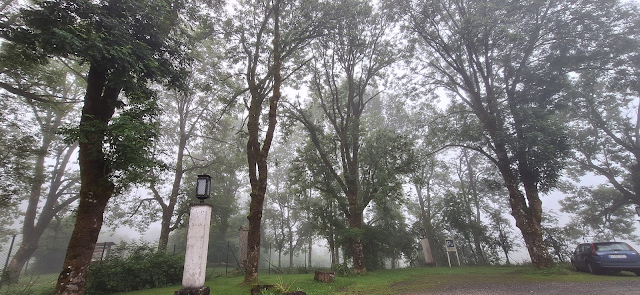
Our first destination is the Sierra de Urbasa in the Basque-Navarra border area. In a landscape that comes across as a mash-up of Ireland and Germany, we spent the night experiencing a sensation we haven't had for over a year now - cold. The Irish foggy dew kicked in soon after dark in the German forests of Northern Spain.
Something interesting of note - people here don't scream as much as the Valencians; in fact I was quite surprised to hear the commentary of the football that was on low in the crowded campsite tavern.
Yesterday started with the usual blind panic: packing the car, taking the last bits to our storage container, tidying the apartment ready for the professional cleaners, handing over the keys to the agent, then finally taking off two hours after my preferred departure time.
The first angry leg of the journey took us to Teruel, just inside Aragon, full of excited children fighting with each other over the slightest thing. Recent changes to the direction of traffic forced me to drive up a winding narrow road in Teruel that ended in a gap no wider than 2 people and I had to reverse between houses and parked cars for a good 100 metres. With the kids providing a running commentary and a small crowd of helpful but concerned locals, I managed to keep a lid on the pressure.
The city was in full fiesta mode - there were bikers, truckers and old timers everywhere. The city centre is quite packed with narrow roads and I decided to abandon the car on an incline just outside and walk to a restaurant. The kids had no intention of walking far, so in the first main square we sat at a restaurant table and ordered their greasy offerings.


Something sat badly in my stomach and I decided to go and rescue the car. And a very good thing too, because about a minute afterwards, a parade of trucks led by the local police came steaming up the hill.
I fortuitously found a parking space no more than a couple of hundred metres further up. Then I scuttled back to the restaurant and ate my burger. I am not a fan of vertical food - I like it spread out on the plate so I can stick my knife and fork in it without having to pick anything up with my hands. But the bread it came in was tasty, not the usual cardboard crap.
The journey from then on was pretty uneventful - one stop at a motorway service station café for apple cake and a coffee to dispel my imminent drowsiness and off we set. The colours changed from yellow to green a little after Zaragoza. The rolling hills and grey stone escarpments took on a gentler subalpine nature. And suddenly Navarra was upon us. On the notices and road signs the Ks, Zs and Xs became more prevalent and virtually worthless in local Scrabble, and the asphalt changed from yellow concrete to sleek black with freshly painted white trim. The steering wheel and brakes had more work to do, and the car lights came on much earlier than down south.
The drive from the main road up to the campsite reminded me of the tree-lined approach to Saarburg from Luxembourg, although much narrower and darker. It had been raining and the ground was populated with puddles. The number of hairpins up to the campsite was remarkable, and we had it almost to ourselves.
Up among the heather, thistles and gorse at the top of the hill about 1000m above sea level, lies the serene camping ground where we stayed on our first night of our 65 days in exile, a rudimentary but ultimately spectacular beginning to our adventures.


The evening was spent at the tavern, eating txistorra sausages and watching the first part of Germany's laboured victory over Denmark in Euro 2024. We took the kids back to the tent, where they made a great number of excited noises before letting the fresh mountain air overcome them. Bonny Bee chiseled hard at work in the car to keep warm before joining us to witness the distant flashes of lightning reflecting off the tent's white shell.
The morning revealed a classic Highland gloom which evoked memories of past northern European autumns, but this was midsummer in Spain. Next time anyone makes a snarky comment about the weather, I will remind them that the temperature in this part of Spain barely rises above 23 in summer.
It was around a quarter to nine on a Sunday morning in a landscape more suited to the Brothers Grimm or Roddy Doyle than Cervantes or Lorca, but stomachs needed filling and I had the distinct feeling this area had adopted the German propensity to close the shops for long periods. After driving through a couple of towns, I stumbled upon a café full of lonely old men sitting in solitude on different grey plastic tables staring at something, mainly a newspaper, but sometimes their own drink. Another German habit.
I bought some breakfast cakes and a couple of molten hot coffees and slowly stumbled back to the car, stopping at every bench to let my fingers cool down. I'm surprised the plastic lining in the cups didn't melt, quite frankly.
When I arrived back at the campsite, I was greeted by a bout of pandemonium caused by not having enough to do. This would be the theme the whole day. By one o'clock, we were crawling up the canvas and bouncing off the mattresses. There are only so many times you can visit the horses and feed the donkey. The poor kids needed something to do because this was getting to be a running theme. The main issue is Bonny Bee still needs to do her translation work, otherwise we'll be sleeping on an Andalucian beach in August. So once she finishes her work we can go places and do things. I don't mind occupying them myself, but if there's a good chance their mother can join us, I prefer to wait.
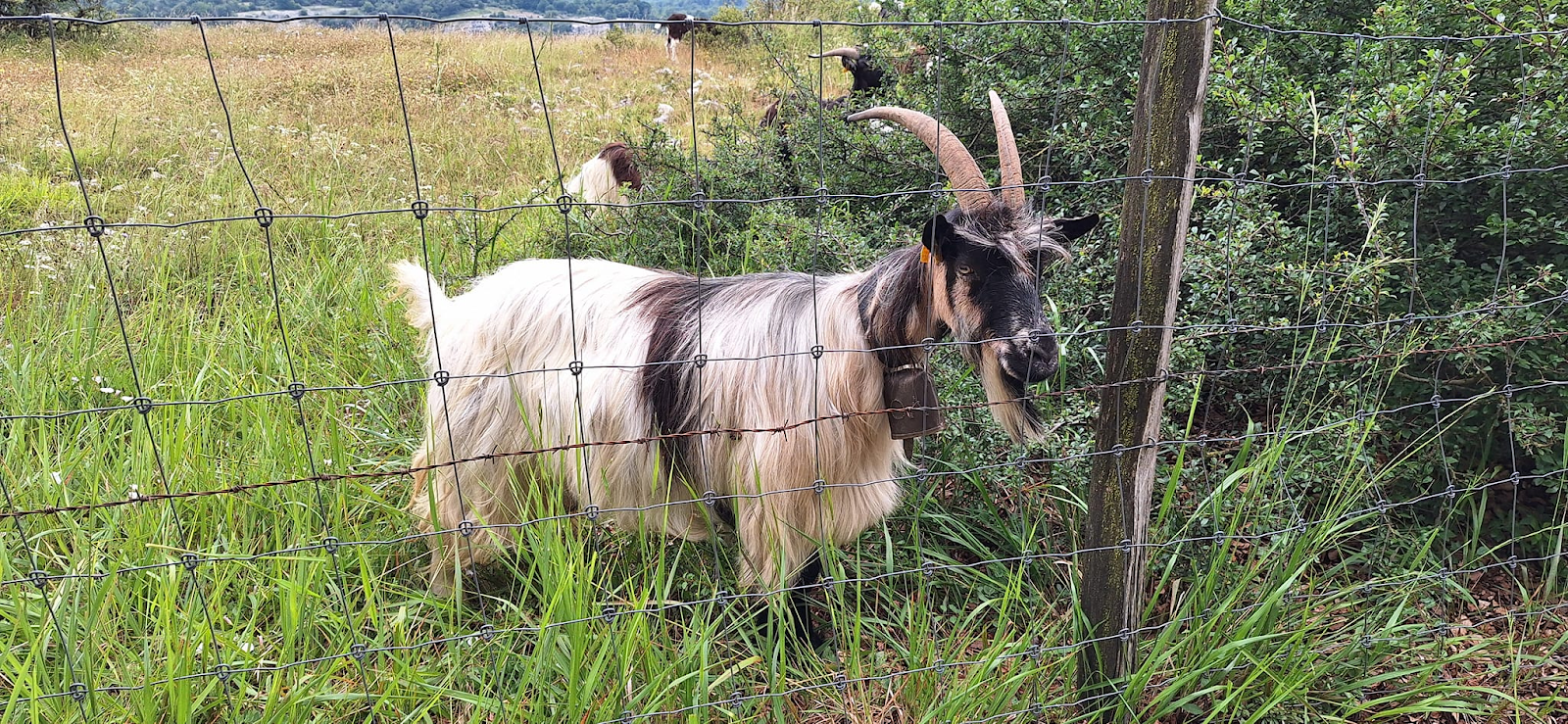
At one thirty we had a bite to eat and afterwards we took a trip to the local panoramic viewing platform, passing cows, sheep, horses, and goats, all who had access to the road too, and were not afraid to amble into the middle for a hilarious lie-down. This particular activity was the least German part of the day. In the Teutonic Lands, that type of behaviour would have caused the road to be closed and brought out several emergency services. Here, it's a matter of just making sure you don't drive too fast and giving way to cars on the other side.
Livia felt like just chilling in the car, so Milda and Dainoris joined us for a walk to the viewing platform.


And what a view it was.
I don't think I can remember the last time I was flabbergasted by such a spectacular expanse of land. It could have been Germany, Ireland, Austria, Switzerland, the UK, Czechia, Slovakia or Poland, but nobody expects to be greeted by goats in front of a full green, clouded, windswept valley while wearing long trousers and coats in Spain, even here. It's just not the stereotype. And how silly these stereotypes are.
As we made our way through the heathland full of birds like the jay and the hawk, we were astounded by our children's knowledge - Milda pointed out a thistle to us, and Dainoris told us some facts about the insects. How do they know this stuff?!
Arriving at the car, an alarm was going off, and it wasn't clear where it was. But it happened to be our car. After the initial dumbfounded reaction had given way to a disturbing feeling of worry, I noticed that Livia had managed to prise open the car door and that had somehow set it off. She may be fairly aloof at times, but she is very resourceful.
Back at the campsite, we all had a rest and I decided to go to watch the football.
It's now Monday morning. We made the decision to get going early - it's not even 9 am and we're eating breakfast in the next town.
We left Saarburg for a reason last year: this reminded us why.
Today's destination: San Vicente de la Barquera.


MORE PHOTOS: