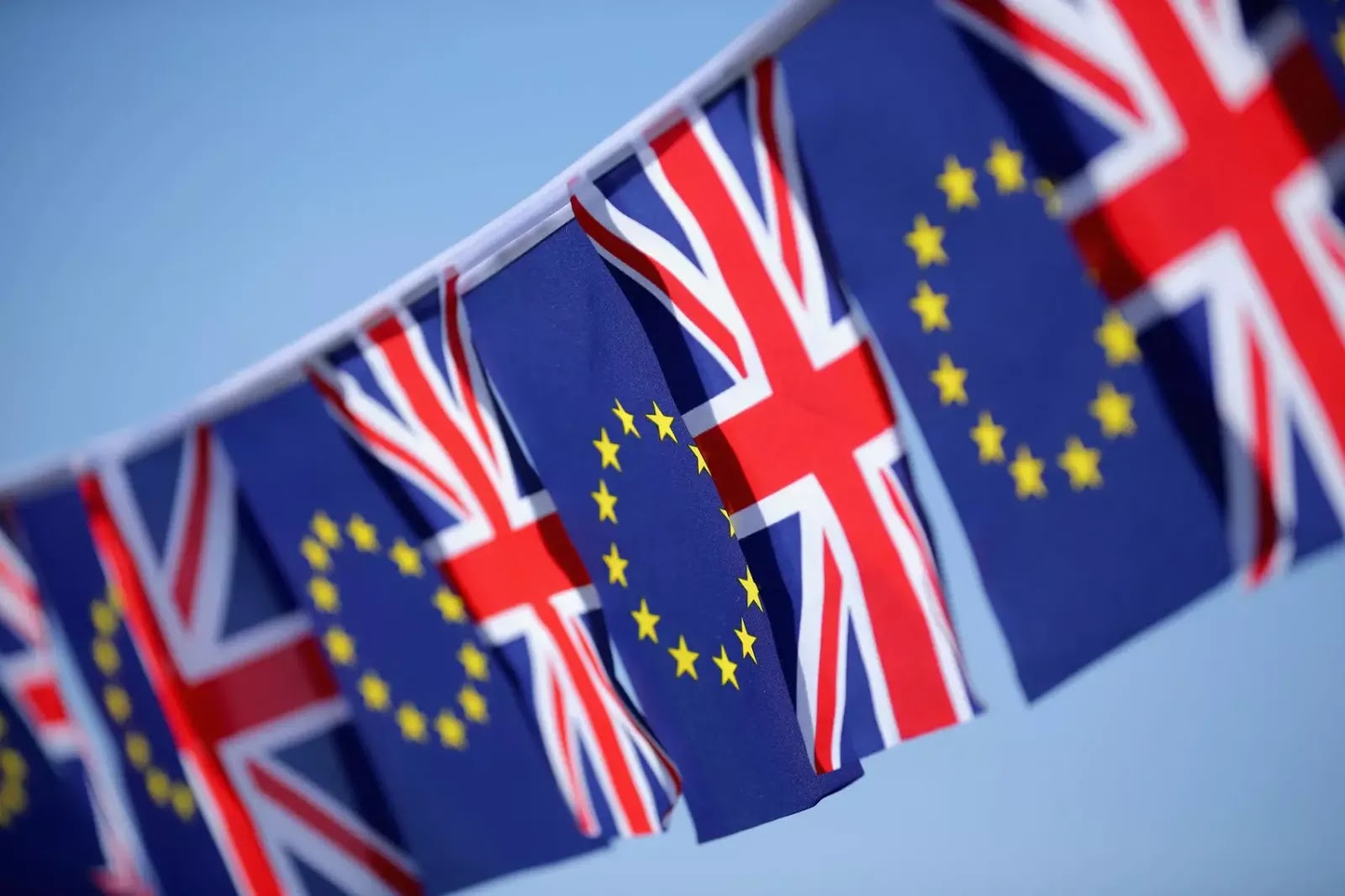
Tuesday, 5 September 2023

Why we moved from Luxembourg to Spain

FOR SALE: 5 bedrooms, 3 bathrooms, 1600sqm land, 100m to supermarket, 200m to bus stop direct to Luxembourg, contact me for details


IF YOUR BACK IS AGAINST THE WALL, THE ONLY WAY IS FORWARD

Thursday 29 June seemed like such an ordinary day. I drove the two younger children to their crèche, then took our five-year-old eldest, Livia, to her speech therapist. We went to the playground a little afterwards, before I drove her to school ready for lunchtime. When I arrived, the head teacher asked me to join him in his office. He weirdly called me by my first name, which I found slightly unsettling. For legal reasons, I will not mention the name of the school, or any names of those who work in there, but you can be sure that my account of events is accurate.

Back in winter, at the parent-teacher meeting, Livia’s teachers had come forward to tell us Livia was showing some behavioural issues and didn’t want to speak to them in French or German. Throughout the time, we heard reports of Livia eating leaves, stones, paper, and taking other children’s hats and throwing them over the fence onto the footpath that runs next to the school. Having said that, I also noticed that the staff tended to exaggerate the severity of typical children’s behaviour, for example at the end of the school day, all children were assembled downstairs in the canteen, and if the noise levels went above what I would call Thursday Afternoon At A Village Tearoom Level, the lights would be switched off until the kids went back to being dull and apathetic zombies again.

Livia’s German teacher in the school had suggested we send her to a “Special School” in Germany, where they would “look after her and help her find her place”. A German doctor, at a pre-school inspection in Trier spent half an hour in his room with her and then declared that she had autism. We were sure this was not the case – there are certain very large pointers to autism, and she had very few of them.

If anything, we thought she had ADHD, but these so-called professionals were pushing hard to make sure she ended up isolated from the real world in an age where most education systems are closing their separationist schools and moving towards a more integrated model. We were quite adamant that if we reached the point where we were forced to send her to her certain isolation, we would get the hell out of here.

It was at about this time we started getting letters from the local school in Saarburg. The head teacher wanted us to visit to enrol Livia there. Considering her complete aversion to German, this was a non-starter. We are not totally sure how she decided to reject German, but back in 2019, she was in the local child daycare centre here, and she absolutely hated it, which is why we moved her to Luxembourg in the first place. So enrolling her there would be a step backwards.

I remember very clearly, when she was just two years and four months old, taking her back to her daycare centre in Saarburg after Christmas. She entered her room and saw her educator, but then she noticed the head of the school, a rather unsympathetic and businesslike woman. Livia took one look at her and ran to me screaming. I resorted to get her out of there and vowed never to put her in a local school again.

Fast-forward to 2023: all of this barrage of various messages from different people in the school was leading up to something, of course: the school was trying to expunge someone who didn’t fit their Sound-Of-Music, Top-Of-The-League-Tables image, and the German authorities were trying to reclaim one of their own from the clutches of the neighbouring country.

The nurse at Livia’s school said she thought we should send her to the paediatric unit in the CHL Hospital in Luxembourg to have an assessment. We went there, and the very kind doctor spent a few sessions getting to know Livia before writing out eight (that’s EIGHT) prescriptions for various specialists and tests: child psychologist, ophthalmologist, speech therapist, ergotherapist, ENT doctor, blood test, brain scan, and one other I have forgotten. These would come in very handy if the German authorities decided to follow through with their half-hour assessment and request us to send Livia to a Special School.

For the next four months, I spent at least two days in every week driving her from place to place, getting reports and assessments done. After I told her about the German doctor’s rather rushed assessment, the psychologist said she was convinced it wasn’t autism and found the method, state-approved, to reach that conclusion extremely troubling. She also felt that the school was trying to shake off their own responsibilities towards Livia.

The speech therapist had ten sessions with Livia, and she has advanced very far since those early days where she found it hard to make conversation. We are coming to the conclusion that along with a form of concentration deficiency, she also suffers from a crushing lack of self-confidence; an almost pure form of perfectionism. I should add that all these appointments had taken their toll on my working life: I am paid per hour, so I had lost about €2000 in earnings through all these appointments, and spent about €700 on them, which I wouldn’t get back, because Livia was seeing specialists in Luxembourg. If I took her to Germany, I would lose even more time at work, even if the service were free.

We came to an agreement with the school’s head teacher that we would like to conclude her tests before we take any action, and all this could last until way after the end of term. Our idea was, as she was born at the end of August, it wouldn’t really harm her to repeat the previous year while we did all the tests necessary to put in place a proper regime. The head teacher seemed to think this was viable, but he would have to run it past the board of directors. However, he didn’t think this was a big issue. We even told him we would be prepared to pay more for any extra outside help brought in.

In early March, we had another meeting with the teachers, and one of them came to me in private to say she thought we should take precautions and apply to some other schools, just in case. This filled me with panic so I did just that. We wouldn’t hear until the end of June from the other schools, but we had to hope we would get in somewhere, or Livia would be condemned to her solitude.

In the meantime, Livia was struggling to communicate with some of her teachers. A few of the after-school carers, who spoke predominantly English, managed to have a good relationship with her, plaiting her hair, getting her to draw and paint some elaborate pictures, playing with the material, but the morning teachers in the learning hours really saw her differently. They would say Livia would mess up other children’s artworks, spread sand or soil across the classroom floor, or mix up all the pieces from different sets of games. On occasion, she would soil herself and have to be cleaned up. All this happened in the mornings, and was, as far as I am concerned, a cry for help. The teachers just saw this as an annoyance, and didn’t really relate it to her state of mind.

We were “summoned” to a meeting at the local school in Saarburg to discuss Livia’s options there and we informed her that under no circumstances would we be sending her to that school. She also wanted to send Livia to a “Special School” in Trier, which would mean Livia’s school holidays would be different to mine and to her siblings’. We might never have a week free where we would be able to be a family again.

When we arrived at her office, with all three children because I was going to take them to school directly after, Milda walked in first. She is nearly three years younger than Livia, but this alleged “pedagogical professional” astoundingly said “ah, this must be Livia.” I replied “no, she’s 3 years old, and she’s called Milda.” First mistake. Throughout the meeting, she didn’t once address Livia or even acknowledge her.

After 45 minutes in there, the three were understandably getting a little boisterous. It was at this moment she at long last spoke to them, rebuking them with the following remark: “this is a school, we don’t play games here.” Second mistake. I spoke to the children myself, saying “you heard her, there’s no fun allowed here!” She tried to backtrack, but I wasn’t going to let her get away with such an outburst.

She then decided to go for the ultimate in nonsensical power-play: “yes, well having seen her, I can definitely say she would be better off in Trier at one of the special schools.” Third mistake. To which Kirsten and I politely told her to take a long walk off a short pier.

We really hoped one of the other schools, where English was the main teaching language, would come through, but otherwise, another year in the same school repeating the year might help her grow in confidence while we finished having her assessed. It was the lesser of the two evils, the other being sent to a German school where she would most likely flounder and lose any confidence she had picked up.

In mid-June, we received news from one of the English-language schools we had applied to: they were sorry to inform us that Livia had not made the cut. This was a disappointment to us, but having filled out the enrolment questionnaire, which was clearly designed to spot a child likely to reduce its ranking in the national table of scholarly excellence, we were hardly surprised.

The other English-language school wrote to us soon after, to say that she was on a waiting list and we would be informed when a place came free. That might not be for months or even next year, meaning that our hopes were firmly pinned on her current school. I asked the head teacher, and he said all the paperwork would be done and he would inform me when the board of directors had given the green light. I presumed this meant we were going to be all right.

I had already planned the summer holiday to Denmark from 20 July to 8 August down to the second, including stopovers in northern Germany, ferries, three different rentals, and a birthday lunch for my 50th with my good friend Gustav, who had a house 200m from our rented apartment on our final week. I had started telling the children about our impending trip, and showing them pictures of where we were going.

I had also planned to return to Denmark a few weeks later at the end of August for Gustav’s wedding. On that note, our other mutual friends had arranged his bachelor party which would take place the same weekend as my 50th birthday, and it would be a pretty special time – fishing, hanging around on the beach, camping, and smoking a succulent piece of meat for 24 hours. I had even got the perfect ruse for his surprise: I would meet him, take him out for lunch, go for a walk, while other friends would set up a gorgeous party scene in his backyard overlooking the Baltic Sea before taking him off to Copenhagen for a night of camping and merriment around the fire.

But all that was about to be pulled from under our feet.

On Thursday 29 June, I stepped into the head teacher’s office. He took a deep breath, invited me to take a seat, and began:

“It is with the deepest regret and frustration that I am charged with informing you that the board of directors will not agree to let Livia remain in the school next year. They don’t think it’s something this school can handle. We don’t have the space to cater for a Special Educational Needs child here – as you see, we are already struggling with the space we have. I am truly sorry, as I thought they were going to agree to it.”

His eyes were moist and he was holding back some emotion, but I could tell he regretted ever leading me to believe it would get the go-ahead. I called Kirsten while I was in his office so that he could deliver the news twice – it was the least he owed me. Kirsten gave him a diatribe I don’t think I’ve ever heard her deliver. She went absolutely berserk, and rightly so. She felt betrayed and let down. He advised us to write a letter of appeal to the board of directors.

I left the school, went to my car and let out the most anguished sounds I have ever let forth from deep inside my soul. I knew the road had reached its end. This was the point where Livia was sentenced to a life of unfulfillment and ordinariness. She would never find herself – her anxiousness would manifest itself and she would forever be stigmatised by her so-called “condition”.

It was just before that horrendous meeting that the leader from the local school in Saarburg sent a menacing email telling us “time is pressing.” Later on, I found it rather suspicious to get it at that moment, and my suspicions were confirmed when our neighbour, who works at the same school, said in a passing conversation that she had heard our application had been rejected.

In the days that followed, we decided to fall back on other contingency plans that we had considered were unlikely to be required, but we should have some anyway, and that included a list of countries that would be acceptable to us both. My list was a lot longer than Kirsten’s but we had two countries in common: Ireland and Spain.

I looked on the International Schools Database at various cities in Spain, and did some research on the Irish education system. Both seemed viable, but it was the cost of living and especially property prices that swayed us towards Spain. Also, it was going to be a city, not a glorified village in the middle of nowhere that we would move to – we are city people at heart, and after 15 years here, it was time to move back to our roots.

I stumbled on a very revealing fact: Spain’s third city, Valencia, has three times more international schools than the entire country of Luxembourg, and ten times more than our entire state in Germany. This alone is an appalling indictment of the lack of educational infrastructure and the unimaginative scarcity of choice in this area. When we consider Luxembourg is home to almost three-quarters non-native people, it starts to really exasperate me that the pitifully low number of educational facilities is woefully oversubscribed.

It is also an element of shame that one of the pillars of European integration, the freedom of movement of people, is at the national level, just a sham. The shining light on the hill of European identity, that we can live and work in, fall in love in, be educated in any other European country, is not real. It is kind of a cross between Potemkin and Schrödinger – it’s there but it isn’t, it’s enshrined in law but it’s not carried out. You see, in Luxembourg, if you want to work in many sectors, you are required to have a certain level of Luxembourgish language skills, even though French and German are also official languages, and English and Portuguese are pretty prevalent too.

Also, many jobs require certain qualifications to fill these posts, with some countries (let’s be honest, everything to the west of the former Iron Curtain) making it mandatory to have locally recognised certificates. This has caused a crisis of recruitment in many sectors of employment. But this isn’t unique to Luxembourg: this is being replicated all over Europe. That’s how EU member states keep immigration down, and one of the reasons the UK was so popular: because before Brexit, it didn’t apply such rules. Two of the sectors affected by this are education and medicine. There are so few psychiatrists catering to youth in Luxembourg, that they are sent to Belgium or Germany for treatment. Also, there are difficulties recruiting native speakers to teach foreign languages. Imagine a country like Denmark, where a qualified Spanish teacher from Spain needs to speak Danish to teach their own language in a state school.

A week after the atrocity at Livia’s school, I came to pick her up for the final time, just before their end-of-term party. I really didn’t feel like standing there watching the kids give the parents a performance when I knew Livia would be a bystander. I was sure they were quietly relieved, too, in a macabre way.

And a few days later, I flew to Valencia on a reconnaissance mission: I went to view a potential school for all three children and to sign in at various rental agencies. The school itself was ultra-modern, had bigger and better facilities including sports facilities, a theatre, and a lot of technology. I was dumbfounded at the difference from Livia’s school, where they weren’t even in possession of a blade of real grass in the grounds. And it wasn’t as expensive.

Rents in the city weren’t cheap, but less than Luxembourg for much bigger places. We would probably start off with a short-term rent and in the meantime find a more permanent place where we could ship our possessions to.

I resolved to get the ball rolling.

Upon my return, I started my research. We put the house up for sale, and started sorting out our stuff into two categories: what we would take by car in August, and what we would leave here packed up for when we moved in to a longer-term place. I cancelled my office contract with the coworking place, and looked for another one in Valencia. Another point here: there are three times as many coworking places in Valencia as in Luxembourg.

This is the right place to go, as I can find another place to work much more easily if we need to shift the centre of activity to another area of the city. Furthermore, if the school doesn’t work out, we have so much more choice.

I had also planned a party on 27 August to celebrate my 50th birthday earlier in the month, as well as our 20th wedding anniversary on 6 September, and Livia’s 6th birthday on 29 August. It was to take place at a hillside venue with beautiful views of the Saar valley. I had already sounded out a band to play, and we had written out the invitations. This was also a victim of circumstance.

The realisation that we needed to leave was traumatising – we had finally got things sorted in our lives: the garden was now almost perfectly how I had planned and conceived it over the last 13 years; I had a wonderful little office to work in, where my ideas were flowing; I had started to regain some of my pre-children and pre-Covid social life, meeting up with old acquaintances again; and I had established a burnishing reputation in Luxembourg for my professional services, being called on by some of the country’s most influential citizens. I was also continuing in my active support of Ukrainians in the country, and had some big ideas.

All of this was swept out of the door by a dismissive wave of a hand in a school board room. The period between receiving this news and arriving at a new destination is an oxymoronic and multi-layered sensation:

First, there is a mix of utter fury and resentment that everything you know and have built up has been taken away from you. You think about all the people, places and events that you will no longer be part of.

Then there is the sheer panic about the amount of work you need to do in such a short timeframe – find a new place to live, arrange schools, hire a container to throw out all the stuff you can’t take with you, pack up your belongings, call various people to arrange a house sale, plot a way of getting to your new destination, cancel all your subscriptions, arrange passports for your children, sign out of social and municipal organisations, arrange for someone to feed your cat for a few weeks until you can come back and get him, close bank accounts, and the list goes on.

Following this, there is the feeling of the unknown: how will the children adapt? Can we find a place to live? Are we able to cope with the stress of it all? Will we have enough time to clear out thirteen years of life in a house and move it all to Spain?

And finally, there is the long goodbye. You spend more time in places you like to be: a kind of drawn-out attack of nostalgia. We spent every evening in our garden playing with the children, or sitting in one of the numerous seating places dotted around the garden, looking out at the view and noticing things we never did before, such as finally seeing our hibiscus blooming, which it hadn’t done for the past 8 years. I went to the Danish café in Neudorf more frequently, I took a few detours in the car to see some of the old places I used to visit, I looked more intently at everything to try to remember it. I took a lot more photos, although it will be a while before I will be able to bring myself to look at them.

Moving house will bring about some difficult decisions that you have to take in cold blood. There are certain pieces of memorabilia you collect during your lifetime that were nice to keep at the time as a souvenir, but you maybe shouldn’t hang on to them anymore. A bottle of very strong alcohol that I received on a hilarious trip around Slovakia; some notes from my raucous A-Level Law class in 1991; some trinkets I bought on various excursions.

Then there was a box of old papers and cards from years past that linked to an occasion, such as a remarkable Georgian restaurant in Moscow, a pub in a small Scottish village where we had a wild night, a youth hostel in a haunted castle in the Black Forest, the bus timetable of a route I took in the mountains of Andalusia, a page from a Polish phone book with the number of someone I regarded as very special, a rather flirtatious note tucked into a menu from an admirer in Prague.

These are things I couldn’t part with, as they are etched on my soul, but there were other things that I had to let go of. The memories will grow fainter or even die, but you can’t keep hold of every morsel of your existence.

All this has made me understand the plight of refugees. I am lucky in that I don’t have to head off in a hurry and leave everything behind; but the feelings that they evoke and the impressions that I have are similar: I am not leaving on my own terms, I am abandoning the comfort and familiarity of my home, my professional and leisure activities and telling myself it’s better where I’m going. I am trying hard to convince myself that it’s the right thing to do. I am jumping off a cliff and hoping for a soft landing.

Which brings me to the saga of how we found our new home: upon hearing the news, I knew I needed to get something sorted straight away, but I refused to compromise. I had always promised myself that if we were going to leave our lovely house, it would have to be something very special indeed. I would go as far as to say that the only reason we remained here is because of our house – the garden has been my life’s labour over the last 13 years, and has seen so many changes.

From being just a plain parcel of grass with a couple of walnut trees at the top, my garden now has 30 trees, including a majestic hanging cedar, two cherry trees, four apple trees, a tulip tree, and the queen of the garden, a magnificent two-coloured maple that provides dappled shade on our terrace. There are blueberries, blackberries, raspberries, sloes, redcurrants, roses, cypresses, and even a magnolia so rare, you can count the number of species in the country on one hand. There is a pond with a bridge surrounded by pampa grasses and syringa, and just below it a seating area made up of slate stones in a semicircle where roses and catkin grow side-by-side.

So as you can imagine, I’m not going to give this place up so easily. If we were going to move, I would do everything I could to assure we found something special. Since my youth, where I made some awful life choices, I resolved to reverse every negative or regretful occurrence that affected me or those around me by taking affirmative action. This was one of those times.

I went to the main real estate website in Spain, Idealista, and began to search for places to rent within budget. Many of them were really good for the rate, especially if you compare them with what is on offer in Luxembourg for the same amount. I wrote to a few of the agents, but I heard nothing back. Which is why I decided to go to Valencia for a couple of days myself. Firstly, I wanted to make sure it was the right choice, but secondly, I wanted to personally visit some of the agents myself, just to make sure they knew I was serious.

One of the places I had found on Idealista was a truly splendid four-bedroom apartment in a gated community about 15 minutes north of the centre, right next to the beach, with a communal swimming pool, children’s playground, tennis court, ice cream cafés, tapas bars, French bakery, and its own parking spot. I would have had to be completely nuts to not even try to apply, even though the queue for the place, if all applicants were brought together, would probably resemble a Japanese metro station in rush hour. I sent an enthusiastic message over the website and hoped for the best.

It was a rent from September to end of June only, as the owners rent it out in the summer to tourists for a higher weekly tariff than the off-season monthly rent. Living there would be beyond our wildest dreams: it would give the children such a fantastic kickstart to their new lives in Spain. I imagined bringing them home from school, then heading to the beach for a swim and having dinner in a chiringuito before we went home to bed. Or the rush they would get hurtling down the five floors to the swimming pool. I was picturing our ability to sit on the enormous terrace and have dinner in short-sleeved clothes and sandals while watching the sea. In November.

A place worth moving to: beach access, swimming pool, parking space, entertainment facilities, children's playground

But I was sure I needed to jump through an enormous number of hoops to get there. Being in Valencia and actually going along to speak to the agent herself would surely help – I don’t think there are many who would go so far just for an apartment, but this was different. After my visit to a potential new school, I called a taxi driver I had befriended called Toni to drive me to the agency near the outstanding Palace of Sciences in the south of the city. In 38 degrees heat, I walked the final 500 metres to the agency, located at the back of an enormous converted warehouse, only to discover that the woman responsible was not there. Crestfallen, I left my details and went back to my room on foot in the stifling heat for a siesta while I figured out what to do for the afternoon.

But to her credit, she did call me back explaining the situation and what we would have to do. As I would discover over the coming three or four weeks, she was a really kind, patient and happy woman called Mercedes, but when talking business, she also did her job properly. “Are you aware it’s available only until June next year? Why would this suit you?” I replied that this would give us the opportunity to look for a more permanent place to live, and if we found one in the spring, it would allow us time to send for our stuff and set it up properly. In our conversations, she had a warm and human approach which made me feel we were actually in with a chance.

I wasn’t dreaming yet, but I had made contingency plans. There were a handful of more expensive and smaller apartments on an Airbnb-style short-term rental website and one of the places was rather humdrum but fairly adequate for our purposes. It had no access to a balcony, but it was big enough for us all. I would rent it for a couple of months until we had bothered enough agents to give us a place. It was near the beach though, which meant we could at least do something in our free time. It was the only one perpetually vacant on that website, and it was an instant book, which is why I considered it our place of last resort. I wasn’t even sure it was actually real.

As the weeks went on, Mercedes and I spoke on a number of occasions, and each time she would prepare me for the next stage of our application, guiding me through the process. There were times I became quite despondent as I was getting jittery, and I nearly pressed the button to apply for our last resort when I saw the advertisement had been removed from Idealista. But I held on against all hope, even with the start of the school year only five weeks away.

Three days before my fiftieth birthday, I received a call from Mercedes, telling me that if I agreed to certain conditions of residence set in a new Spanish law from May 2023, she would be able to grant us a rental contract. Did we have a job to go to? I explained that we were both freelance company owners and were going to set up an office in Valencia once we were there. Which is true. To Mercedes, I could only say the truth – she was that type of person.

I misunderstood the mood slightly, as our conversations take place in Spanish and I was in a supermarket with a rather verbose Livia constantly seeking my attention, so following the phone call, I messaged Mercedes to say if it was a big obstacle, it might be better for me to find a short-term rental and once I’m there look for something else. Within an hour, she called back and explained that all we had to do was write a reply to an email she was sending asking us about how we were going to finance our stay through work.

24 hours later, two days before my Big Day, and a month after my visit to her office, I received email confirmation that, indeed, we had been granted a rental contract for the highly-cherished apartment by the sea. Upon reading it, I let out a scream so full of elation that I got a massive headache within an hour. I think it was also my body releasing all the toxins of stress it had accumulated since the start of this ordeal.

To read about how things went, you’ll have to wait a while – I need to write it first! But write it I will. 

Saturday, 25 December 2021

What is the true meaning of this time of year? Not what you think…


Anyone who insists on everyone calling this season “Christmas” because of their own beliefs is sadly mistaken. It is not really about Christ, in fact; it has been adapted over the years. So when someone confronts you because you said “Happy Holidays” instead of “Merry Christmas” they need to do a bit of research. Most of the celebrations and symbols are direct adaptations of past traditions, and the Midwinter celebration of fire, light and long life is much older than the pastiche of Midwinter revelry it became later on.

It’s the season known by some as Christmas, a time when people often think back to the late Bronze Age science fiction sagas of Mary, Joseph, a donkey, and an impending humble birth. But of course, Christmas was not the original name for the almost two-week period starting on the night of 24 December. It took a great deal of time, planning and slow conversion of symbolism, but many very ancient traditions remain. It wasn’t always about that humble birth, but that particular symbolism served a very useful purpose. 

The early Church had a problem on its hands: there were so many huge festivals around the winter solstice that got in the way of its rising influence and threatened its authority. By using the symbolism of the season, it managed to legitimise the hijacking of the Midwinter festivities for itself and turn people away from their original purposes. It seems, though, that we are slowly coming full-circle and that we are abandoning the religious accessories. How many similarities are there between the traditions of today's Midwinter and those before the Christian interval, and what type of festivals were there?

Saturnalia:

There was the week-long Saturnalia that covered the solstice period, where gifts were exchanged, slaves were served by their masters, people swapped their clothes, and lots and lots of drinking and eating took place. Because of its midwinter setting, candles were given to symbolise light and warmth, and there were even post-Saturnalia sales where younger family members were given some money to go out and spend there. This particular festival was a prevalent feature throughout most of the Roman period, and was such an important event that only a handful of Roman emperors dared bring any changes. Some of the madder ones tried to reduce it to five days, or even to just one evening, but most people carried on regardless for the entire week, or even longer.

Brumalia:

This was also a Roman festival that carried on in one form or another until at least the 10th century in some parts of the empire, mainly in the east, but had all-but died out by the end of the time of Justinian in 565 CE. It celebrated the Earth and all things to do with hunting and farming, such as sacrifices of pigs and goats, as well as the downing of wine.

These revels took place because it was the saddest, darkest time of the year and it was important to remember that the light was about to return. The celebrations meant people could say goodbye to the increasingly darker days and welcome in the longer evening light. Different parts of Europe had variations of these events, but they all pointed to the main tenets of the darkness leaving and the light returning, the finishing off of the autumn fruits that had by now turned into strong alcohol, and being with close friends and family.


Yule/Jul:

Further north, the winter festivities were not that different. The god Odin had various other titles, including Jölnir, from whom the name of the festival comes. Various toasts were made, such as for the success of the coming year's harvest, the rulers, the gods and the ancestors. The culmination of that festival in Anglo-Saxon England was known as Modraniht, or Mothers' Night, and was a night of fire and sacrifice. What they all had in common was that folk brought along the food they had left and shared it all out. The food, especially the meat, was blessed by the most senior chieftain and they all participated in the debauchery until nothing was left.

Adapting the old for the new:

And it was these types of festivals that got in the way of any form of coherent building of Christian societies.

What to do?

This was an easy question to answer, and one that Rome had a great track record of: adapt these pagan festivals through their symbolism, and absorb them into Christianity without too many drastic changes. The people had to be coerced into this acceptance rather than have their already centuries-old celebrations banned to introduce this novel idea.

So although many early Christian thinkers were rather critical of all the winter excesses, they set out to make the period both holy and at the same time jolly. And so the great Midwinter festivals carried on but over time they carried more of an air of religiousness and formality. 

(By the way, the word jolly was at one time thought to have come from Jul, but it is most probably from the Old French, meaning pretty or nice.)

The symbolism and the adaptation of traditional behaviour had to be perfect to convert the midwinter festivals into somehow representing Christian beliefs, and it was telling the story of the birth of Jesus and overlaying the imagery of his appearance that made it the most appropriate way of coaxing people away from their original beliefs.

Symbolism

1. Decorating houses and halls with winter foliage was a way of demonstrating that there was still life around, despite the regression of nature. Mistletoe, holly and ivy had different connotations: mistletoe was the symbol of peace and love, hence the kissing; the Green King’s crown and garments were made of holly, and ivy was the representation of death, the death of the past year. Being an evergreen, winter-hardy plant, holly was also the symbol of fertility and long life, but it came to represent Jesus’s crown of thorns and the red berries of his blood, and inevitably eternal life promised in his story. In order to substantiate people’s roles in the world, the holly was a male symbol of fertility, and ivy the melancholy female representative of death. These days, of course, that would be understandably unacceptable, but the two were and are synonymous with the season.


2. Wreaths, always round, symbolised the circle of life: winter-to-spring-to-summer-to-autumn and back to winter, as well as the life cycle of people and families. These wreaths had nothing to do with anything concerning God or infinity, and the candles in an advent wreath (or crown) were added to provide a visual countdown to Christmas. Midwinter was seen as the birth of the sun deities, such as Mithras and Sol, so it was just a matter of converting this into the coming of Jesus.


3. Midwinter singing and drinking took place to drive away the evil spirits. As Christmas was supposed to be a celebration, it was easy to incorporate this, although it was toned down a lot from the originally-intended decadent blowout that the Romans put on. The Anglo-Saxon Modraniht mentioned earlier was easy to incorporate, as it meant Mother's Night, and Mary was always going to be given the role of the venerated and highly-favoured lady.


4. Even the candles are pre-Christian in origin, symbolising the rise of the sun. Many traditions around the world have candle festivals to bring human light to the darkest time of the year, but the idea of Christ’s light (the people sitting in darkness seeing the light, as Matthew and Luke wrote) was too convenient a symbol to drop.


5. Gifts were given at Saturnalia at an event called Sigillaria. They were generally small wax or earthenware figurines of particular deities that would represent different things to different people. Again, the gifts the Three Wise Men brought to the manger would serve perfectly to subsume this tradition into this new hybrid festival.


6. Dressing up and theatrical performances were the norm at Saturnalia. Traditional roles, like masters and slaves, were reversed; men and women swapped stereotypical clothing; later on in the Middle Ages, mummers, or guisers, groups of actors, musicians and singers, would pass round houses and perform folk plays. And things like carols and wassailing also took place at other times of the year, and were greetings of the season. It was also easy to Christianise these traditions, like creating plays that told the story of Jesus’s birth, and carols that moved away from evoking paganistic aspects like holly, ivy, midwinter and snow, and instead talked of angels, virgin births, stars and a plethora of miracles.


7. Fasting was not the monopoly of Christians: the period before the great feast was given over to fasting so that it would be a much more rewarding celebration. This of course sat very well in the new Christian narrative to get people in the mood and looking forward to the coming festivities, even if they were now about something totally different.

One of the reasons there are a lot of fruity, unctuous dishes, often a prized part of an animal to eat, and a log to burn, were all to do with the season – something to look forward to in the middle of the darkness.


Continuity of pre-Christian traditions

Many of these traditions carry on today in some form or another: 

1. Pigs are big: In the UK and Ireland, North America and parts of northern Europe, it is common to eat a Christmas Ham. This came directly from the ancient sacrifice of the Yule Boar. Even in Sweden there are cakes shaped like pigs, all evidence of how far we have come since those days, but still a continuous line from two or three millennia ago.

2. Happy music: Carol singing and wassailing were for the entertainment of the guests, and this tradition of seasonal merriment in music is not exclusive to the English-speaking world in the form of Rudolf the Red-Nosed Reindeer and The Twelve Days of Christmas. Other traditions have the same idea, such as the Czech/Moravian Bodejž se zbrunčila bába and Petit Papa Noël in France. There are plenty of non-Christian carols that have transcended the unsubtle Christian overtones and are staples of the period of the year.

3. Dressing up: Also in parts of Europe it is still common to cross-dress and enact stories to audiences, such as in the UK with pantomimes, where the main character is a girl dressed as a boy and his/her opposite number is often a mature man dressed up as a lady.

4. Cosy by the fire: The Yule Log was actually a whole tree that was cut up to provide warmth during the Midwinter festivities so that people didn’t get cold and could enjoy themselves in warmth. The fermented fruit would have helped...

5. Puddings and cakes: A lot of that fermented fruit was also mixed with the leftover ingredients, nuts, and any spices to disguise any dodgy flavours. It slowly transformed itself into something more “gentrified”, such as Plum Pudding in the UK, Julekake in Norway, Stollen in Germany, and Panettone/Pandoro in Italy. Some have alcohol or nuts in them, some not, but what they all have in common is the dried fruit and of course being served as dessert.


In the end, the meaning of this season is by far more complicated than I have laid out here, but one thing we can all say is however you reach this time of year, we should all try not to force our ideas of the festival on others, no matter which beliefs you have: relax, celebrate, enjoy the company of your friends and family, sing, eat, get drunk, and dress up how you want – so greet people in your own way and live and let live!

Friday, 13 March 2020

What is true freedom? Discuss...


Freedom. Liberty. Two words thrown about as a weapon by the right against perceived state intervention and by the left against a corporate takeover of civil society. But who is right? Both? Neither? I can tell you my version of freedom, because I have recently given much thought to it. I am sure some others have already thought up the same, so I apologise for reinventing the wheel, but I wanted to cast an eye on it at this current time when politics in the Western world are in an ultra-rapid state of flux.

I was sitting in various places in my garden and on my terrace one late-spring weekend last year, looking at the newly-planted apple trees and watching a family of blue tits flitting from branch to ground to wall and back to branch. It is one of my greatest pleasures to watch the wildlife enjoying the product of several summers' worth of planting and landscaping, experimenting and seeking advice over attracting all manner of living things with wings, hooves, antlers or tails to grace my garden and the meadow just beyond it.

I rarely play music in the garden; the songbirds make its theme tune. It has been visited by deer, foxes, kites, hawks, song thrush, squirrels, wild boar, even a trio of stray cows that had broken out of their meadow on the hills above our land and fancied a nibble of our grass. Sitting out there is better than anything else. Apart from the exhilarating and highly amusing company of my children, of course.

And that's when it hit me.

This was freedom: the absence of worry. Here I was, sitting in the garden I had conceived, smoking a cheap cigar, listening to the sounds of nature, contemplating life's knottiest questions.

But why?

When I sit outside, the only things that bother me are if I see some weeds have grown back where I  or my gardener had recently removed them, or when a neighbour decides to light a fire. Pretty petty stuff, really, in the general scheme of things. Freedom, to me, is the absence of worry, and the cleanness of the conscience. Let me explain.

Absence of worry includes not having to think where your next meal is going to come from. Or not having to decide whether to default on the electric bill to pay school lunches. Or having utility bills low enough to not notice the payments leaving your account. Freedom is being able to walk down any street knowing you're nearly totally safe from accidents, fights, shootings, natural disasters and reckless driving, unless you do something reckless yourself; leaving a hospital after treatment without a huge life-changing bill hanging over you; the ability to jump in the car and drive across three international borders on a short road trip; not needing to worry about your children's safety in school as the only drills they practise are fire drills; and being able to sit in my garden typing my own opinions on anything I feel like.

What about the cleanliness of the conscience? I don't mean piety or sinless behaviour, as I get the feeling most religious types are never free of their torment. I mean feeling not guilty for the actions and decisions you take. No regrets, in other words. I am a firm believer that not every crime is immoral and neither is every lawful action moral. I give you the example of activists, whether protesting the climate emergency, LGBTQ rights, the destruction of public land, or just supporting the opposition. In other words, those who believe in their causes to the extent that they get put into prison, not just in countries like Russia, China or Equatorial Guinea, but in Poland, Hungary, the UK and the US too.

I also mean the compromising of morality for the sake of profit, for example Western countries that turn a blind eye to the horrors of Chinese brutality against Uighurs, Tibetans or Hongkongers to keep trade going, or the selling of weapons to inhumane regimes such as Saudi Arabia. Where does one sit with Israel? I deplore antisemitism, or indeed any -ism against fellow sentient beings, but I am very comfortable in saying that I am passionately, even fervently, anti-Netanyahu and everything he stands for. Peace must come, but it cannot come while anyone who believes in the right to statehood and self-determination for Palestinians is accused of being anti-Jewish. This is an overreaction designed to silence anyone who questions them and their unlawful behaviour.

As I sit here typing this out on a Chinese laptop, with a Logitech keyboard made in China, I realise I am also contributing to the suffering of others, but consumption guilt at this level is only avoidable with extreme pickiness and a lot of hours spent questioning sales staff in computer shops as to the provenance of their wares. Instead, we need to make it clear to suppliers that their pursuit of profit is what is driving this enriching and rewarding of nasty regimes, and that we are willing to pay more for these products if their production is moved to a place in an enlightened and democratic nation where jobs are needed. We need to pay more for our products; bring them in-house, so to say, and create more jobs in our backyards. This means we need to communicate this loud and clear to companies who switch production to places with cheap workers to save more money.

Also, cleanliness of the conscience goes for how we treat others on a personal basis. I have done things to others that I look back on with regret. I am not alone here at all. I cannot change the past and go back to rectify it, but I can show sincere remorse and make up for it by never doing it again. There are other things I have done which others would find immoral but which I have thoroughly enjoyed. I did not harm others or even come into contact with others while doing them, or even make anyone feel uncomfortable or embarrassed. There are people who would consider them immoral, nonetheless. I really don't care what they think, as the only thing that was harmed was their squeaky-clean and vacuous imagination.

I used to be very conservative in my views on life. I used to be quite sanctimonious and I took life very, very seriously, to the point where I had no fun at all, which was mainly due to nurture, not nature, sadly. I also expected those around me to do the same, believe the same, and act the same, so as you can imagine, I had very few friends. But slowly, as I met people who loved life, tried everything out that does not kill or harm, accepted failure and celebrated success, I realised my view of the world was silly, fuddy-duddy, old-fashioned, and was not a way to keep friends. I rejected the moralistic, moralising, morale-reducing harbinger of self-righteousness that I had become, and opted for the flexibility and open-mindedness that I had learned from various people I met on the way to being me. It was a long and tortuous journey, but it led me to finding contentment and spiritual peace.

Why am I saying this? Because in the manifestation of my former self, I was not free. Freedom is in the head more than anywhere else. And it starts with how you act towards yourself, then other individuals, then society in general, in that order. Acting honestly towards yourself is where freedom begins. It means thinking those thoughts that you used to suppress, it means switching off your own internal censor and investing in your own happiness, not brushing it to the fringes of your mind.

Freedom is a concept, not only a legal item, and we need to exercise it without encroaching on others' sensitivities or causing fear, misery, discomfort or anger in them. This is why, when I read stories about Americans and their attachment to guns, I cringe. If Second Amendment zealots really want to have their weapons, they should also balance that up with the sensitivities of other individuals and general society, especially around those who have victims of gun violence in their circle, of which there are many. So compromise needs to be found. Think of it like this: I like to play golf, but I don't play it in the town centre park; I go to a golf course, a place specifically dedicated to this activity. Likewise, people with guns should balance their wishes with those who prefer to have the freedom to walk the streets or send their children to schools without worrying if they'll come back.

Likewise, religious people can have whatever views they like, but they have no right to impose them on other individuals, or society in general. If they don't agree with women's rights over their bodies, equality of the sexes, alcohol consumption, polyamory, soft drugs, euthanasia for the terminally ill, or anything else for that matter, they can believe and practise that amongst themselves, but they should leave the rest of us well alone and not impose their narrow views on the rest. This is why, in true democracies, religion and the state are kept far, far apart. Let's face it, the teachings of most religions evoke the same basic rules: look after your fellow human being, do nobody harm, live to the full, don't judge. But it is precisely that fourth one that has made its way from religion into politics. And we should slam it straight back into its box.

For this is what true freedom is - practising what you believe is right for you as a conscientious and mature citizen, and keeping your nose out of others' business, unless you can see clearly that it is having a detrimental effect on them or those around them. This is by no means an issue of keeping the state out of our affairs; this is in fact a personal and societal one, and the sooner these matters become mainstream, like public smoking did, the more effectively we can deal with those who still seek to impose their views on us all.

I find it horrific that the very same people who complain about the encroachment of the state on their daily lives also want to use the state and the law to limit people's rights in areas they have problems with. For them, it's okay to let the state take a back seat over healthcare, guns, education, corporate responsibility, youth issues and social security, but they clamour vigorously for state "intervention" in matters as diverse as abortion, bailing out failed banks and even freedom of expression when it questions their own beliefs.

To recap: freedom is not about the ability to carry weapons in public or impose your views, religious or not, on the rest of society: it is the absence of these things, and most importantly, the absence of worry. Now before you think, "well yes, but that requires earning money to a certain level". No, it doesn't. It means that, whatever your salary (or not), you should not need to worry where your next meal is coming from. Let us take social democratic countries where it is more difficult to die of hunger than not, what do they do right? They maintain the idea that we're all in it together. Part of your taxes goes directly to providing for the most vulnerable in society, and making sure they can integrate as much as possible into normal life.

In rampant capitalist countries, it is claimed that low taxes and trickle-down economics will sort out the poverty by allowing companies to invest what they would have paid in taxes to hiring more workers. But this is a fallacy, as not only do companies cream off their profits for their shareholders first and foremost, it also encourages individualism and selfishness in the fact that people start to covet their own wealth and treat colleagues, neighbours and even family members as competitors rather than team players. Another side effect is, although you can become fabulously wealthy, you can also die destitute and hungry, or rejected by your health insurance.

We need to balance the right to live in peace with the duty we have to provide for those less fortunate than us. And that means doing what is right by our fellow humans - let us give everyone the right to live without worry: let us use our taxes to support those who need it most, whether it is by providing everyone with proper medical care, adequate and affordable housing, essential supplies, or opportunities to feel useful in society. For freedom is the right to live your life without worry, and that means money needs to be much less important. Societies need to extricate themselves from their reliance on budgets and markets.

I remember in the past when I was working for a pittance and still had to pay the bills, rent and living costs. In the UK, I dared not rock the boat even one little bit for fear of losing everything. I was not permitted to have any self-pride.

In order to deliver a society free from this in the 21st century, we need to move away from our addiction to news outlets and newspapers run by media moguls, our exaggerated commercial activities, and our feelings of inadequacy brought about by comparing our lives to our peers on social media. We need to reconnect with the society we live in, be true to ourselves, and stand by our principles. But most of all, we need to drastically change the way we live: this starts with taking steps to ensure all of us fit into the society where we live and work; be less cynical about helping others; entreat our leaders to enforce the rule of law; pay more for products and commodities to ensure their ethical cleanness, and be prepared to give up outdated privileges that encroach on the well-being of others.

Finally, we need to wean ourselves off those things that destroy or harm our planet, our only home. Cars are a necessary evil, but we can do a lot more to avoid using them too much. It was once said that to gauge the level of advancement and collective wealth of a civilised society, we should not count the number of fast cars on its streets, but the number of rich people who take public transport.

In these testing times, we all need to take mental stock of what we have and what we are going to lose if we continue to let society slide further into the abyss. We should not be reacting glumly whilst watching it happen; we should be proactively stopping the cynical takeover of our cherished freedoms by those who seek to reduce or remove our rights to freedom of conscience and make us worried about everything around us.

Wednesday, 30 January 2019

Livid is not the word. I am beyond apoplectic. Britain is now a basket case.


After two and a half years of indecisiveness, secretive meetings, blocking, kicking the can down the road, arguing, gaslighting, throwing the subject off course, obfuscating, giving warnings of dire consequences if the vote is not respected, rejecting warnings of dire consequences if the vote is respected, we have now ended up with fewer than 60 days before we leave the EU, and we still don't have a fixed plan.

It could have been so much easier. If Theresa May had engaged with all parties in the negotiations to leave the EU from the very beginning, we could have had a much better consensus on our future direction. As it happened, she gave very little away and now we have a situation with less than 2 months to go where Parliament has had enough, is starting to get twitchy, and is attempting to remove the Brexit process from the government's responsibility.

Theresa May did nothing to consult anyone on the process. She just continually banged on in her robotic way about her wish to carry out the "will of the people" in the 2016 Referendum.

Firstly, a 52-48 outcome is not an adequately wide margin to accept even a minor change to the constitution of the local Women's Institute, let alone the destiny of a country of over 60 million people. Will of the people? Not to me, it isn't.

Secondly, I am furious with the opposition leadership. In fact, not just furious, I am monumentally enraged. I am incensed. Irate. Infuriated. Fuming. In short, Jeremy Corbyn's handling of the entire issue is at best misguided. At worst, it is the most blasé, nonchalant and unconcerned attitude any leader of the opposition has ever taken to a matter of such importance.

There was a time where I thought Corbyn was waiting for the PM to tie herself in knots. Now, I just think he's having some kind of 80s throwback fantasy, preferring to be in opposition, and loving this return to Tory rule where he can act out the fantasy of some Che Guevara-style action hero.

I never really warmed to Corbyn. I found him to be such a wet stick of celery. His parliamentary style, trying to take the poison out of debates with the PM, was a disaster. Theresa May, whose heart is so small and so deep black, despite not having a single idea of her own, manages to run rings around him every week.

Corbyn has spent the last two years being the "nearly man". When you consider, over a decade ago, when Gordon Brown took over from Tony Blair, it was like exchanging a Picasso for a rolled-up caricature of your grandpa made by a bloke in a tourist trap alleyway. Cameron, who is a snake oil salesman with a silver tongue and an empty soul, made Brown look like a total arse.

When Cameron won the 2010 election, and went into government with the contemplative nice guy Nick Clegg, I saw it as an opportunity to rein in the Tories' meanness. The public, with the goading of several hawkish newspapers, saw Clegg as "the guy who didn't see through his tuition fee promises", and wiped out the Liberal Democrats for probably ever. When Cameron narrowly won the 2015 election, much to everyone's surprise, he set the country on its current trajectory.

With the Lib Dems gone, that meant Britain could go back to being a 2-party state, to the delight of the dark forces in politics. With the Labour party infiltrated by left-wing entryists, its first act was to reject the statesmanlike David Miliband as leader and elect his nerdy brother Ed instead. Cameron tore lumps out of him. With the Labour Party's prodigious ability to choose totally unsuitable leaders in key areas (Michael Foot being one that springs to mind), and the grassroots membership's loathing of any leaders that actually do well (Tony Blair for example), they decided to choose someone who couldn't command a police-trained dog to sit, let alone half the House of Commons.

Step forward, Jeremy Corbyn.

Although I am by no means a Labour party supporter, it is to him I turned when I thought Theresa May was about to sell out her citizens overseas (including me). But he did nothing. All he did was waffle on about lost jobs and higher taxes, neglected communities and run-down town centres. Yes, I totally agree with the fact that the Tories have caused untold damage to poor people by ripping the soul out of their communities and flinging hundreds of thousands of poverty-stricken citizens on to the scrap heap known as Universal Credit.

But please, Jeremy, in the name of sanity, DO SOMETHING!!!!!!!

When I see dippy old troglodytes spouting nonsense like "Britain stood alone once before, and we can do it again!" or "Let's go to WTO rules!" I truly despair. These daft souls have learned nothing in the last 3 years, and don't believe any of the warnings raised by experts and those in trade and industry. One rather idiotic old git last week said it would do the country good to miss out for a while, to see what they once had. These people get airtime on the BBC. Yet Corbyn does not take the opportunity to put anyone straight, to the delight of the ERG and their supporters.

He deflects attention, doesn't stick to any point, answers his own questions, refuses to deny in a clear way that he is an anti-Semite, and lets the Tory press walk all over him.

We thought Gordon Brown was a terrible Labour leader. Then Ed Miliband came along and we realised there were even greater depths. Then Corbyn arrived, and it turned out the bottom of the barrel was in fact quite a lot further down. We wonder who will follow him - let's hope we don't discover a new nether region.

In my opinion, the Tories have capitalised on the "niceness" of leaders of other parties - they excoriated Gordon Brown, vilified Nick Clegg, ignored Vince Cable, patronised Caroline Lucas, laughed at Ed Miliband, but there is one party whose leaders they still keep at arm's length - the SNP. They seem to be absolutely terrified of them, and with good reason. Nicola Sturgeon seems to be the only party leader whose reach is wide enough to put a massive dent in the Tories' plans. In fact, there are anti-Brexit English and Welsh people who look to her, rather than Corbyn, as the person most likely to stick up for them in public discourse.

And right they are. Nicola Sturgeon is going to be the first Prime Minister of an independent Scotland. The recent developments in Westminster have set the country on a trajectory that cannot now be reversed. I have always been British, and if you look through my posts around the time of the last Scottish referendum, I was vehemently in favour of preserving the Union.

Now, though, I would totally understand if the Scottish decided they were going to cast off the English and set sail for European climes. I am quite sure they would be fast-tracked to EU membership. Then, the Northern Irish, who are currently having a bit of an existential crisis, may choose to reunite their island. Without the Scots, who have more to do with them than the English, they won't be able to call themselves "British" any more. (As an aside, I would hope the DUP would suffer the same fate as the Lib Dems by going into government with the Tories, but politics over there are deeply entrenched.)

This will leave the English and Welsh. The once great country of empire, cradle of the Industrial Revolution, birthplace of some of the world's greatest sports, now reduced to a friendless husk of isolationist reactionaries and Blitz-spirit circus freaks. The country has been sold off and broken up by disaster capitalists all for the sake of a financial dividend.

Yesterday's seven-fold vote in the House of Commons proved one thing: Theresa May can't find a way out of the impasse, so she is setting up the EU for a fall. When they reject her approaches over this idea to revisit the Northern Ireland backstop, which they have already done, she can blame them for their intransigence and inflexibility, whereas in fact they are just protecting their own (Rep. of Ireland). They owe Britain no favours.

So yes, I am bloody fuming. The Tories always seem to find a way to blame someone else and stay in power on the backs of the gullible and the easily-led. Funnily enough, I haven't met anyone who admits voting for them, but if I did, I will not be responsible for my actions.

They wasted valuable airtime telling everyone that Jeremy Corbyn is an IRA/PLO/Chavez/Argentine Malvinas (delete as appropriate) sympathiser whilst themselves cosying up to the Saudis and selling arms to some of the nastiest dictators around the world.

They trashed the reputation of the Liberal Democrats by inviting them to form a government then hung them out to dry by rejecting the Lib Dems' flagship policy on tuition fees, almost wiping them off the electoral map.

They profess to care about the less well-off and the needy, despite raging with indignation when the United Nations criticised them for their austerity politics.

They blame immigration, especially EU immigration, for causing wages to drop over time, hospitals to become overcrowded, adequate housing to become scarce and expensive, and schools to become saturated, yet refuse to introduce simple legislation requiring everyone who comes into the country to register with the local council, making it mandatory for those nationals to leave the country after 3 or 6 months of unemployment, and counting people in and out as they come, something other EU countries have done rather effectively.

Instead, they go complaining to Brussels that they won't let the UK have concessions on free movement of people.

They are about to do the same smoke-and-mirrors trick - they are lining up their cards. When the EU rebuffs their wish to renegotiate the Irish backstop, they will blame them and turn more people against the EU, even though it is their own fault. This is the ultimate sign of a coward and a cad - if you can't own up to your faults, you are obviously a dishonourable shyster and a cheat.

Finally, when this utter catastrofuck finally gets under way, I hope it ruins the careers and reputations of a lot of Quitlings and their acolytes. They will, however, probably find a way to escape the fate that should befall them, like some Bond villain that gets out of a burning factory by sending for a helicopter, leaving the rest to perish.

In any case, the next few weeks should be programmatic for the years ahead - maybe parties will split, or new ones will be formed. Maybe someone finally gets some balls and says what everyone else knows - that the referendum was fraudulent and unconstitutional. But that's a rant for another day.

Tuesday, 6 November 2018

If you don't engage in politics, you're the reason for this mess

Source: CBS News

I try to litter my Facebook posts with a variety of items from very many fields of life, but the one area that gets the least number of reactions is that of politics. Is it because politics turns people cold? Is it because politics brings them out of their comfort zone? Is it because they're just not interested? Or is it because people feel they don't know enough about it to want to contribute?


I think the answer to all those questions is "yes". And I truly think anyone who didn't vote or at least make some indent in the situation in their home countries should bear some if not a large part of the blame for the ills befalling it.

You go to the hospital with a broken arm and you wait 6 hours to be seen.
Don't complain if you don't engage in politics.

Your children's school is overcrowded and their academic achievements are being eroded.
Don't complain if you don't engage in politics.

The local streets are full of damaged roads and dangerous pavements that have caused a number of accidents.
Don't complain if you don't engage in politics.

You can no longer afford to buy a house in your area because the local council has sold all the available building land to developers who are only interested in erecting top-end housing.
Don't complain if you don't engage in politics. 

Your city centre is now bereft of shops as rents have become too high for small businesses like butchers, shoe repairers and greengrocers. All that's left are estate agents, charity shops and boarded-up windows.
Don't complain if you don't engage in politics.

Your local forest is being prepared for destruction to make way for a company involved in the extraction of fossil fuels from the ground there.
Don't complain if you don't engage in politics.

The seaside resort you used to go to in happier times is now a run-down shell of itself, riddled with drugs and prostitution, where kids as young as 11 are engaging in petty crime and sedition.
Don't complain if you don't engage in politics. 

Your salary has stagnated and prices continue to rise to the point where certain things you took for granted are becoming difficult to afford.
Don't complain if you don't engage in politics. 

You were asked by the Prime Minister to vote in a referendum to stay or leave the EU. You have no idea what the EU does, you don't spend a few moments looking it up on the Internet and in the end you don't vote. Then you lose your job as you don't want to move to Frankfurt.
Don't complain if you don't engage in politics.

Then...

People with dangerous ideas have taken over the government of your country:

  • they want to return any immigrants, no matter how well they have integrated; 
  • they want benefits only for locals; 
  • they discriminate against gays, minorities, women, the under-25s, the over-65s and those with physical and mental impairments; 
  • they want to bring in draconian punishments for even minor offences; 
  • they want to remove the country from any altruistic agreements with other nations; 
  • they want to double spending on weapons and halve spending on education and healthcare; 
  • they want to make military service compulsory; 
  • they want to remove protections to the environment to make extraction of resources in protected areas easier; 
  • they want to remove the financial safety net that has been the difference between your being able to remain living in the area where you were raised to forcing you to move hundreds of miles away;
  • they want to be able to check on your online activities whenever they feel like it;
  • they consider those who disagree with their ideas to be dangerous subversives and are placed under surveillance.

But you don't engage in politics, so don't complain if any of these things affect you.

There is nothing a politician likes more than indifference and ignorance of the issues. It means they can run roughshod all over you and know they can get away with it. They know they can carry out all kinds of nefarious activities, and even if they end up in the press, they have a good chance they'll get away with it.

Don't let this happen. 

Inquire. Engage. Vote. 

INQUIRE:
Look into issues that affect you and the world around you, whether it be public transport, health, nature, or the current government and its activities, and react appropriately to injustices.

ENGAGE:
Do something positive to change things for the better, whether it be writing to your local representative, taking part in a protest, delivering leaflets for your cause or writing blogs.

VOTE:
If you don't vote, you don't make your choice, so don't be surprised when things either don't change or get worse.

Sunday, 21 October 2018

The Samhain Pagan tradition is a time to reflect on human impact on our planet


Samhain - pronounced sáwin - is the Pagan festival that takes place at some point around the end of October and beginning of November, and is often mixed up with Halloween. Although it is pretty certain Samhain spawned Halloween, the difference between the two is on one hand very different, and on the other hand strikingly similar. The Samhain tradition is a celebratory rite where we reflect on those who went before us, and where the curtain between the afterlife and this life is very thin, meaning there may be some overlapping of the two worlds. We also spend time contemplating our own lives. The deep autumn is an important time to understand who we are and where we are going; to remember why we are here and try to reach out to our ancestors for guidance. Understanding the past helps enormously in identifying our current paths. Halloween, as we shall read, is very far from this.

Paganism is, for want of a better metaphor, a very broad church. There are lots of weird Pagans as well as a lot of serious ones, which means we are often targets of derision by those from what we might call the established faiths. There are no real Pagan denominations as such, like in the Christian or Muslim traditions; they are more like independent franchises without the fiscal aspect, although everyone has the same goal: to see the divine in our surroundings, and to revere and protect it.

The divine is very easy to come across in our eyes: the similarly pentacular features of many flowers; the soughing of the trees in the wind; the tides of the sea; the passing of the moon overhead and the shadows it casts; the smallest insect and the largest mammal and everything in-between; the shooting stars and the spinning planets; the incredible detail on the wing of a butterfly; the majesty of bees going about their daily work. The list goes on.

Samhain is the time of year when we witness the dying of the summer flora and fauna, and the retreat of vernal fecundity to its winter sleep, ready for the spring awakening. How do Pagans celebrate Samhain? Any way they choose, but some things remain fixed: a meal to celebrate the harvest; a fire to summon the spirits; a walk in nature (clothes are optional, depending on the time of day/night and the location); an altar with some of the features of this time of year (e.g. the skull of a wild beast, pumpkins, brown leaves or nuts) and the remembrance of those who went before us.

Why are standing stones so important to us? Because they are the permanent legacy of our forebears. One thing we have in common with our pre-Christian ancestors is the marking of the seasons and celebration of the life-cycle of the Earth. Many standing stone circles are calendars, marking the time of year. In spring, the Earth is like a youthful girl, evident in the retreat of the snow and the arrival of hatchlings, calves, lambs, cubs, seedlings and all other forms of life. She blooms into full fertility by June, where the abundance of food and fecundity is all around us. By mid-August, the Lady gives us our harvest before her fertility ends. In autumn she recedes into her grand old age, and in winter she becomes the old crone before once again dying in midwinter, allowing a new life-cycle to begin.

We are reminded of our own mission on Earth: to live, die, and live again - we can never reappear, but we can make sure life continues to do so once we have long gone. This is why I have planted a great number of trees in my garden: they, or their saplings, will live on after me, but they will also allow the birds, insects and other flora to thrive.

Our mission to maximise our efforts to spread the positive effects of nature is misinterpreted by climate deniers or sceptics as needless do-goodery. In fact, what we are doing has absolutely no bearing on the climate change debate at all: we do it anyway, because it is the right thing to do. The recent extremification of weather phenomena is worrying for us all, especially with the recent UN report that gives us a little over a decade to sort it all out before it's too late.

What is disappointing, though, is the attitude of various politicians following an agenda either dictated by their voter base or their party's biggest sponsors. I find it abhorrent that, despite the overwhelming evidence, nay proof, there are people who choose to ignore the situation for their own financial or ideological gain.

If you want to know what is driving current politics, just follow the money. If you want to know our future, take a look at the past. And let us be honest here: it does not look very good. Samhain is a time to put our flora to sleep and help them survive the winter.

As I touched on at the beginning, Samhain often gets bundled together with Halloween. The former is a commemoration of the past, the latter is a commercialised corruption of it, which has, like all other Pagan festivals, been subsumed by Christianity and/or popular culture. Halloween is a shadow of Samhain. It has in fact become the total opposite. Samhain is about remembering those who went before us, lighting fires and sitting in quiet contemplation as befitting this time of year.

Halloween, conversely, is making loud noises, disturbing the peace, and dressing up in scary costumes. Although the spiritual aspect of Samhain spawned Halloween, it was far easier to turn it into a money-making racket as a prelude to Christmas. This is, of course, a total fabrication of the original. Many Pagan festivals have turned into corruptions of the originals, mainly by the Catholic Church - Easter, Christmas and Midsummer's (St John's) Day being just three. The Catholic Church always had an ulterior motive in wanting to do away with Paganism, so it came up with ways to distract the people.

In order to vilify Pagans, and bring people into their "flock", they used the same fake-news-style tactic that is used today - take their symbols and turn them into socially unacceptable things. For example, why does the devil have a red face? Why are horns and pitchforks associated with Satan? Could it be that people from the country, farmers who obviously used agricultural implements, were more likely to be Pagan and have ruddy-red faces from the cold wind, and place horned animal skulls outside their doors to ward off evil spirits? Why did St Patrick kill all the snakes in Ireland? Could it be that the snake, the symbol of Paganism in his day, was a way to use a euphemism to say that he killed all the Pagans?

Anyone, whether from a Christian denomination or not, who dares say we are satanic should do a little more reading, as equating us with evil is like saying apples must be alien because they're green. It says more about the naïvety of their flock to believe everything fed to them by their elders than it does about us.

Finally, I will not be celebrating Halloween this year, not because of any irrational fear of some so-called Satan fellow, but because it is not who we are.

Tuesday, 18 September 2018

Imagine if Leave lost and we imposed a hard Remain - there would be anarchy

Let me take you back two years and three months to the time immediately before the Brexit referendum. The Leave campaign promised we would remain in the Single Market and Customs Union for the sake of business. Things would more or less remain the same. The Brexit deal would be signed and sealed in one afternoon. There would be more money for schools and hospitals, and the mainland would still be there to carry on visiting and trading with.

Fast-forward those twenty-six months, and now those same people are putting severe pressure on the PM to leave everything, which will most probably cause us to become more of a vassal state to the US than we ever were to the EU. They harp on about the "will of the people" and "they've had their say, there should be no more Brexit referenda," conveniently forgetting that the reason we have elections every couple of years or so is precisely to reflect the mood of the people at that time.

So let's see what life would be like if the tables were turned and the British government implemented a hard Remain...

It's the twenty-fourth of June in the Year of Our Lord, two thousand and sixteen. The people have spoken and it's a resounding victory for Remain. 52% of the electorate, a sizeable and clear majority [not, obviously!], have voted to remain in the EU.

David Cameron is delighted, and begins immediate negotiations to take the UK into Schengen and the Eurozone. By 2020, the British Pound will be obsolete, and the only monarchy in the Commonwealth where the Queen's head doesn't appear on the currency will be her own.

The gutter press, though, protests. "DON'T TAKE US INTO THE EURO", clamours the Daily Mail. The Guardian shoots back with images of Leavers including Michael Gove and Jacob Rees-Mogg under the headline "ENEMIES OF THE PEOPLE" for pleading with the PM not to join the Euro.

Remainers take to the readers' comments sections to have a good old-fashioned pitchfork and fire-on-a-stick fight over the direction of the country. They want Boris ostracised and EU flags to replace the Union Jack everywhere except on government buildings.

People like that Wetherspoon's guy and that Dyson fellow are routinely attacked on social media by hordes of Remainers, branding them all kinds of nasty names. Audiences on the BBC's political panel shows like Question Time constantly heckle the few famous guests who still dare to say they are Leavers. Katie Hopkins leaves the country to go and live in Alabama [in the end, there are pros to everything] and receives a slap on the face by several Remainers who showed up to the airport to make sure she left.

Those on the Leave side continue to campaign, saying the vote was close and there should be some compromise, rather than this total sell-out to the EU. Remainers heckle them, especially on social media saying "we won, you lost, get over it", and other cheap slogans to that effect. Leavers say "but we were told if Remain won, we would just carry on as normal, not join the euro and Schengen. We've been lied to!" Remainers say, "we knew what we were voting for", as if that was their original intention. Despite all the archived articles in newspapers and on TV, Remainers insist that was the plan all along.

Of course, this is never going to happen. Why not? Because those on the Remain side are far less vitriolic, caustic, venomous, spiteful, malicious, whatever your description, than a lot of those on the Leave side. Why so? Because, having been a member of a very large social media group actively trying to counter Brexit, I have noticed one thing: all 60,000 members are civil, decent and friendly. And being too "nice" may actually be their weakness.

It is absurd to think that the Remain half of the country would act in this way. Which is why I question a lot of the vitriol on the Leave side. It is astounding how much hate has built up when reading readers' replies in the Daily Mail and the Express. Where does all that aggression come from?

I think it stems from many different places:

  • Many people don't know why the UK gives money to the EU and think it's a waste. 
What they don't realise is that that money is 1% of every country's national spending, and a lot of it is spent doing local projects. The UK, having nine of the most deprived areas in the EU, the money gets re-invested in areas which the UK government would not consider touching.
  • A great number of people are conned daily into believing they are being ruled by Brussels. 
This is an absurd notion, but one that has a lot of support from the newspapers. Many newspaper owners, living overseas or in tax havens, have alternative agendas and don't like the idea that the EU is interfering in their tax affairs, so they cook up all types of stories and twist reality to make it seem like the EU is a left-wing dictatorship. They have been doing this for years. The link to the left here highlights the abominable abuse levelled at Brussels for the last 30-odd years.
  • Too many people found themselves excluded from the benefits of economic development
Successive British governments have done little to improve the lives of a lot of people in poor areas, and more and more people have slipped below the poverty line without having been given the chance to improve and develop. Wages have declined, prices have risen, working conditions have stagnated or receded, property prices have become prohibitively expensive, and healthy food like fruit or meat is a luxury. A lot of these people voted to leave the EU to give the government a kick where it hurts, but in fact, they have hurt themselves the most.
  • Apathy and ignorance
A great deal of the public have entered a kind of limbo world where they are happy with their lot in life (modest living, decent social life, car, a couple of holidays, maybe kids). Things like Brexit are at best a distraction, at worst an annoyance. They maybe voted in the referendum, but did so based on the last story they read and whether it was positive or negative. They don't really care either way because they only go abroad for a couple of weeks a year, don't need EU funding, and have routines that don't matter whether they care about the EU or not. When the Lambrusco price goes up a quarter, they might start wishing they had paid attention over the last 3 years.


What to do about this?
Recently, one member said he thought we should "start getting a bit French about the whole thing", which is not a bad description of where we are today: just half a year away from B-Day, and a whole raft of warnings concerning the UK's preparedness for the eventuality of no deal should be bringing the good people of Britain out on to the streets, but they are a sedate, passive kind of folk; that's why successive governments have been able to make them swallow all kinds of bad measures à la boiling frog.

Getting a bit more active in the streets, more frequently and more aggressively, would be quite a feat for the people of Britain to carry out. There are two reasons for this: firstly, most demonstrations take place on weekends unless they're strikes, because they are busy at work, and because of the British propensity to associate leave from work with bad performance, any time off is precious. Secondly, most British people don't really care enough to be out every day on the streets protesting, as they have jobs and livelihoods that are indispensable to them and they prize their private life more than they care about which people govern them.

In countries like Romania, where there have been great upheavals in recent times, whole swathes of people have been out on the streets for days, sometimes weeks, on end. The constitutional and democratic state of the country there is fragile and still in its infancy compared to that of the UK, whose institutions go back centuries. For that reason, British people still trust in the procedures and processes that flag up threats to democracy. But considering the fraudulent manner by which the Leave campaign won the 2016 referendum, all the evidence against them, and the reams of papers proving collusion with foreign hostile forces, the clamour to bring the perpetrators to justice, let alone annul the result, is unsettlingly quiet.

Why is nobody on the streets? Why are people not angry? Why does it seem that the press is more concerned with Jeremy Corbyn's views on Israel and Palestine than the crooks who are trying to take over the country by stealth? Smoke and mirrors, it seems. Keep the spotlight off the bad news of Brexit just until B-Day, then all hell can break loose if necessary. These gangsters, who have friends in Trump's White House and in Putin's Kremlin, as well as with Salvini in Rome, Orbán in Budapest and Kaczyński in Warsaw, not forgetting the AfD in Germany, the Front National in France, and Geert Wilders's PVV in the Netherlands, are without doubt trying to build a coalition of strong-in-the-arm factions to take on their enemies, the so-called liberal elite.

They hate the tolerance we have garnered over the last few decades. They despise the idea of legal same-sex marriage, multi-coloured neighbourhoods, high standards in areas like food hygiene, the environment and healthcare, and seek to deregulate it all in order to sell to the highest bidder for profit and to the detriment of the little guy. So they created a word for these people: every time someone defends liberal values in public, these people accuse them of being a snowflake.

And herein lies the most basic of all the paradoxes - it's the little guy that put these people in charge in the first place. It's always the little guy who holds all the cards, but no awareness of this superpower. That's why the ones at the top try so hard to garner their support. Look at the crowds cheering Trump at his rallies - with all due respect, they are generally out-of-town, poor, religious, uneducated, or all four. The rallies have taken place in locations like Youngstown Ohio, Huntsville Alabama, and Duluth Minnesota. Their lives have never taken off and they want someone to blame. Along comes the demagogue and sweeps up their votes, even though they'll never see an improvement in their own lives.

Look at the areas that voted for Brexit in large numbers: run-down seaside towns like Redcar, Blackpool and Clacton; post-industrial towns like Stoke-on-Trent, Wolverhampton and Burnley. These are also places where the population has largely been forgotten. So these are prime places for the demagogue to ply his trade. This is where change is going to be instigated, but where nothing will ever be better for those people without firm action by the government of the day.

I am not sneering at these people, in fact I have a lot in common with them. I also spent years living from day to day without any sign of advancement in my life. I had little positiveness in my life and I was often two meals from starvation. I know what it is like down there. I grasped at anything I could that had a positive element to it, whether a potential job offer from a dodgy agency, or even a good write-up in the daily horoscope. Anything at all. So I can also understand when a person with good rhetorical skills can articulate the frustrations of the poor to the nation. The poor and downcast are so desperate that they will latch on to anything that promises to bring them out of their misery, even if it is obviously a lie. Those running the Leave campaign were very aware of that, the Remain campaign focused mainly on the negative implications of leaving without trying to demonstrate all the good that the EU does.

So if Brexit were cancelled: what would happen in the country?

I personally think the following:
10% of people would be very angry indeed, and would provoke protests and riots.
25% would be upset for a week before returning to normal.
65% would be very glad that this was no longer filling their news feeds every day

But 100% would be livid that the government put the country through such a waste of time and money, and for what? To settle an internal dispute in the Conservative Party. I would hope this débâcle would split the main two parties enough to cause them to break apart, so that we would have four or five main parties, and we can eliminate that stupid First Past The Post "system" for good.

We can live in hope...